Atopobium Vaginae: The Marker of Stubborn, Recurring BV
Atopobium vaginae, now also called Fannyhessea vaginae, is one of the most BV-specific organisms known. It rarely appears in a healthy vagina, it teams up with Gardnerella inside the BV biofilm, and it is often the reason an infection resists treatment and keeps coming back.
What is Atopobium vaginae?
Atopobium vaginae is an anaerobic bacterium strongly and specifically associated with bacterial vaginosis. In 2018 it was reclassified and renamed Fannyhessea vaginae, so you may see either name; they refer to the same organism.
What makes it important is its specificity. Unlike Gardnerella, which can turn up in healthy women, Atopobium vaginae is rarely found without BV. Its presence, especially together with Gardnerella, is considered one of the most reliable molecular markers of BV. It is also a fastidious organism that standard cultures struggle to grow, so it is detected by molecular methods such as PCR.
It joins Gardnerella inside the protective biofilm that forms on the vaginal wall during BV. That partnership is part of why it matters so much: shielded inside the biofilm, it tends to tolerate standard treatment better than other organisms, which contributes to the high rate of BV that returns after a course of treatment.
Why Atopobium vaginae is the recurrence organism
If BV clears and then comes back within weeks, treatment-resistant organisms inside the biofilm are a common reason, and Atopobium vaginae is a prime suspect. Three features make it stand out.
Highly BV-specific
It is rarely present without BV, so detecting it is a strong pointer to genuine dysbiosis rather than a passing change.
Tied to recurrence
Sheltered inside the biofilm, it often tolerates standard treatment, which helps explain why BV returns.
Molecular detection
It does not grow easily in standard cultures, so PCR is the practical way to know whether it is present.
What an Atopobium vaginae result means
Finding Atopobium vaginae, particularly alongside Gardnerella and reduced Lactobacillus, is a strong indicator of BV and, if you have a history of infections that return, a clue to why. It does not by itself dictate treatment, but it gives you and your doctor a clearer picture than symptoms alone.
This is the kind of organism guessing always misses. A swab under a microscope cannot identify it, and a single infection test will not flag it. A PCR microbiome panel measures Atopobium vaginae alongside Gardnerella, your Lactobacillus and the other BV organisms, so recurrent infections can be understood rather than repeatedly treated blind.
The BV Microbiome Test
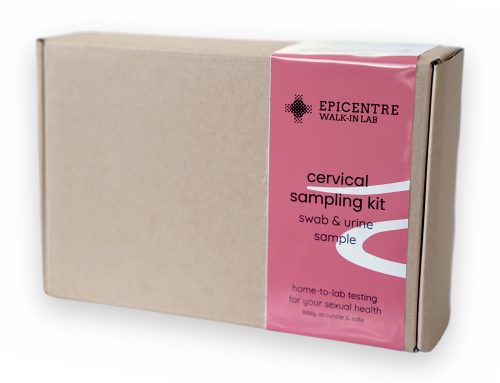
R1,609 17-target PCR panelEpicentre's BV Microbiome Test is a 17-target PCR panel that measures Atopobium vaginae alongside Gardnerella, your protective Lactobacillus and the other BV-associated organisms. No doctor's referral, and you collect the sample yourself in private.
- Protective Lactobacillus levels, including Atopobium vaginae, so you can see whether your defences are intact.
- BV-associated bacteria, such as Gardnerella vaginalis and Atopobium vaginae, the organisms that take over when Lactobacillus falls.
- Group B Streptococcus, which matters in pregnancy.
- You collect the swab yourself, in private, at a branch or at home, with guidance if you want it.
Testing in South Africa: why recurrence matters here
Bacterial vaginosis recurs in a large share of cases, and research in South African women has shown high rates of treatment resistance among BV organisms, including Fannyhessea vaginae. With BV also linked to higher HIV risk locally, understanding why an infection keeps returning is worth more than another round of guesswork.
Find out why it returns
If BV keeps coming back after treatment, a panel shows which organisms are still present, which helps explain the pattern.
Name the cause
Discharge or odour that will not settle is worth identifying precisely rather than treating blind.
No referral, three cities
Walk in at Observatory in Cape Town, Hillcrest in Durban or Parktown North in Johannesburg, or test at home anywhere in South Africa.
When someone has had BV three or four times in a year, Atopobium is one of the first things I think about. It hides in the biofilm and rides out treatment, and you simply will not see it unless you test for it directly.
What testing can and cannot tell you
A microbiome test maps which organisms are present and in what balance; it is not a diagnosis on its own.
- The result describes your vaginal flora at one point in time, which can shift with your cycle, sex, antibiotics and hormones.
- It does not replace a clinical assessment. Use it to inform a conversation with a healthcare practitioner.
- If you have severe pain, fever, or symptoms in pregnancy, seek medical care rather than waiting for a result.
- PCR results take 5 to 7 working days.
Atopobium vaginae: quick answers
Vaginal microbiome testing in Cape Town, Durban and Johannesburg
The BV Microbiome Test is available at all three Epicentre walk-in labs: Observatory in Cape Town, Hillcrest in Durban and Parktown North in Johannesburg. Walk in, or book online first. You collect the swab yourself, in private.
Other organisms in the panel
Sources
- A new PNA-FISH probe targeting Fannyhessea vaginae (formerly Atopobium vaginae). PMC. 2021.
- In vitro interactions within a three-species BV biofilm and antimicrobial tolerance. J Antimicrob Chemother. 2022.
- Antibiotic susceptibility of Atopobium vaginae. BMC Infect Dis (PMC). 2006.
- Coleman JS, Gaydos CA. Molecular diagnosis of bacterial vaginosis: an update. J Clin Microbiol. 2018.
Medically reviewed by Dr Samantha Naidoo, MB ChB, FCP (SA), Medical Director at Epicentre Walk-In Labs. Reviewed 9 June 2026. This article is general health information, not a medical diagnosis. Epicentre Aids Risk Management (Pty) Ltd provides diagnostic laboratory testing and does not provide diagnoses, treatment or prescriptions to the public; results are intended to inform discussions with a registered healthcare practitioner.
Understand why your BV keeps coming back
The BV Microbiome Test measures Atopobium vaginae and your full vaginal flora from one self-collected swab. Walk in at Observatory, Hillcrest or Parktown North, or order a discreet home kit.