STI guide
Ureaplasma urealyticum: testing, and what a positive result actually means
Carried harmlessly by a large share of sexually active adults, and implicated in real symptoms in some. Finding it and understanding it are two different things.
Basically
- A positive result is not automatically a diagnosis. Ureaplasma is part of the normal flora in many people with no symptoms.
- The medical picture is genuinely unsettled. It is associated with real problems and is also found routinely in healthy people. Both are true.
- The Medium panel at R1,580 is the cheapest one that includes it. The 4-target Small does not.
- Results take 5 to 7 working days and no doctor's referral is needed.
- The wider panel is more useful here than elsewhere, because what else was found is most of the interpretation.
- Epicentre does not diagnose or treat. Whether this explains your symptoms is a doctor's judgement.
What Ureaplasma urealyticum is
Ureaplasma urealyticum is a bacterium that lives in the genital tract of a substantial proportion of sexually active adults without causing them any trouble at all. It is the STI panel result that most often needs explaining, because finding it is not the same as having a disease.
Ureaplasma is a commensal organism in many people: it is simply part of the normal flora. Detecting it tells you it is present. Whether it is causing your symptoms is a clinical judgement that depends on what your symptoms are, what else was found, and what has already been ruled out. That judgement is a doctor's. Epicentre does not diagnose.
Why the medical picture is genuinely unsettled
It is worth being honest about this rather than picking a side. Ureaplasma occupies a contested position in sexual health medicine.
- The case for treating it: it has been associated with non-gonococcal urethritis, with bacterial vaginosis, with some adverse pregnancy outcomes including preterm birth, and with infertility investigations where nothing else is found.
- The case against treating it: it is found in large numbers of people with no symptoms whatsoever, so its presence alone is weak evidence of causation. Several guidelines do not recommend routine screening for it or routine treatment of an asymptomatic finding.
Both of those are true at once. This is why the result is worth having and why what to do about it belongs with a clinician who can see the whole picture.
Symptoms, where it is implicated
- Burning or discomfort when urinating
- Discharge, usually thin
- Urethral irritation in men that does not settle
- Unusual vaginal discharge or odour
- Pelvic discomfort
Most people with ureaplasma have none of these.
How Ureaplasma is tested at Epicentre
By PCR on a self-collected swab or a urine sample.
The 4-target Small package covers chlamydia, gonorrhoea, trichomoniasis and herpes type 2, and that is all. If this organism is what you want to rule out, the Medium at R1,580 is the cheapest panel that reaches it.
| Test | What it covers | Price |
|---|---|---|
| Medium Sexual Health PackageMinimum panel | The minimum panel that includes it. 9 targets, with HPV, herpes types 1 and 2, trichomoniasis, chlamydia, gonorrhoea, E. coli O18 and ureaplasma. | R1,580 |
| Large Sexual Health, vaginal swab | 17 targets for anyone with a cervix, adding the vaginal flora behind bacterial vaginosis, Mycoplasma hominis and candida. | R1,925 |
| Large Sexual Health, penile swab | 17 targets for anyone with a penis, adding syphilis, chancroid, Mycoplasma hominis and candida. | R1,925 |
| Extra Large Sexual Health | 34 targets, our most thorough screen. Not sex specific. | R3,305 |
| Essential Oral Sexual Health | 9 targets from a throat swab, where the exposure was oral. | R1,580 |
| Comprehensive Oral Sexual Health | 16 targets from a throat swab: the oral 9 plus respiratory organisms. | R1,925 |
If your symptoms are discharge, odour or irritation, the 17-target panel matching your anatomy is worth the difference, because it covers the vaginal flora and candida alongside ureaplasma. A result showing ureaplasma alone, with nothing else, is much harder to interpret than a result showing the whole picture.
Those three are blood antibody tests. Add all three for R524, or take the blood-based Sexual Health Express at R1,078.
When to test after exposure
From around 1 to 2 weeks. If you have had ongoing symptoms, test now rather than waiting.
Your result, and what happens next
You get one report, emailed to you and to nobody else. It is the YourGenes patient report: colour coded, in plain language, with a line for every organism on your panel saying whether it was detected. There is no second document, and no separate practitioner version. This report is what your doctor reads too.
If ureaplasma is detected, Epicentre does not treat it. We are a diagnostic laboratory. We collect samples, run tests and report results. We do not diagnose, prescribe medication or provide treatment, anywhere, including on WhatsApp. You have two equally good routes from here:
- Your own doctor, clinic or pharmacy clinic. Take the report. It names the organism, which is exactly what they need.
- An independent doctor we work with, who consults online or in person on sexual health results. She prescribes on her own responsibility, not as an Epicentre service.
This is the part people skip. If one of you is treated and the other is not, the infection comes straight back at the next exposure. Your partner should be tested, whatever your result says about you.
For ureaplasma specifically, the conversation with your doctor is less about how to treat it and more about whether it explains what you are experiencing. Bring the whole report, not just the one line, because what else was or was not found is most of the information.
Where to test
Cape Town
24 Lower Main Road, Observatory, 7925
Monday to Friday, 08:30 to 16:00
Durban
2 Knelsby Avenue, Hillcrest, 3650
Monday to Friday, 08:30 to 16:00
Johannesburg
02 7th Avenue, Parktown North
Monday to Friday, 08:30 to 16:00
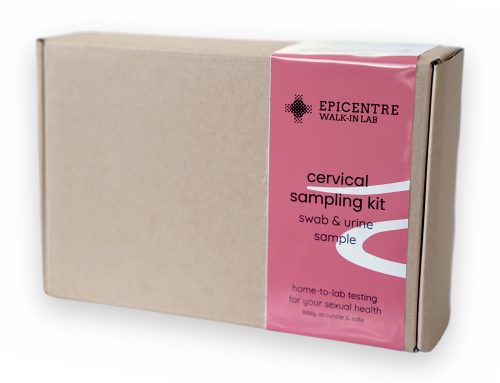
Walk in during those hours, no appointment and no doctor's referral. All three branches are closed on South African public holidays. If you would rather not come in, a home kit is couriered to you in discreet packaging and a free courier collects the sample.
You do not need a reason to get tested
No doctor's referral, no appointment, no awkward conversation first. Results are emailed to you and to nobody else.
Common questions
Is Ureaplasma urealyticum an STI?
It is sexually transmissible, but it is also part of the normal genital flora in a large proportion of sexually active adults who have no symptoms. Calling it an infection in every case would overstate it. Whether a positive result explains your symptoms is a clinical judgement, not something the test result decides on its own.
I tested positive for ureaplasma. Should I be worried?
Not on that result alone. Ureaplasma is found in many people with no symptoms at all. What matters is whether you have symptoms, what else the panel found, and what has already been ruled out. Take the full report to a doctor rather than acting on the single line. Epicentre does not diagnose.
Which package includes ureaplasma?
The Medium at R1,580 is the cheapest panel that includes it, and it is also in both 17-target panels at R1,925, the 34-target Extra Large at R3,305 and both oral panels. It is not in the 4-target Small package.
How long do results take?
5 to 7 working days, emailed as a YourGenes report.
Can I test for ureaplasma at home?
Yes. It is a self-collected swab or a urine sample, both of which work from a home kit couriered to you with a free courier collection.
Does ureaplasma need treating?
Sometimes, and sometimes not, and this is genuinely unsettled in the medical literature. It has been associated with urethritis, bacterial vaginosis and some pregnancy complications, and it is also found routinely in people with no symptoms. Several guidelines do not recommend treating an asymptomatic finding. That decision belongs to a doctor who can see your whole picture. Epicentre does not prescribe.
Can ureaplasma affect fertility?
It comes up in infertility investigations, particularly where nothing else has been found, and it has been associated with adverse pregnancy outcomes including preterm birth. The evidence is not as firm as it is for chlamydia or gonorrhoea. If fertility is your concern, this is worth discussing with a doctor rather than treating on a test result alone.
Should my partner get tested?
It is reasonable, particularly if either of you has symptoms. Because ureaplasma is carried without symptoms by many people, a positive result in a partner does not on its own mean anyone has done anything or needs treating.
Why people trust us with this
Ready to test
No appointment and no doctor's referral. Walk into any of our three branches, or have a kit couriered to you in discreet packaging.
Not ready yet
That is normal, and there is no rush. Take the prices away with you, or ask us something without booking anything.
Other infections in this guide
Important. Epicentre Walk-In Labs is a diagnostic laboratory operated by Epicentre Aids Risk Management (Pty) Ltd. We collect samples, run tests and report results. We do not diagnose conditions, prescribe medication or provide treatment, and nothing on this page is medical advice. Results are released to the person tested. If you have symptoms that worry you, or think you may need urgent care after an exposure, see a doctor or clinic without waiting for a test result.