Clostridium difficile: The Post-Antibiotic Threat
C. difficile causes severe, sometimes life-threatening diarrhoea, almost always after antibiotic use. When antibiotics destroy competing gut bacteria, C. difficile spores germinate and produce toxins that damage the colon lining. In South Africa, TB patients are twice as likely to develop CDI, and mortality in public hospitals reaches 29% in C. difficile-positive patients. It is severely under-diagnosed in SA.
at highest risk
Why is C. difficile dangerous?
How does C. difficile cause harm?
Symptoms of C. difficile infection or overgrowth
"C. difficile is the infection that keeps me vigilant about antibiotic stewardship. Every unnecessary antibiotic course is a roll of the dice. When I see a patient with severe post-antibiotic diarrhoea, C. difficile testing is the first thing I order."Dr. Samantha Naidoo, MB ChB, FCP (SA), Medical Director, Epicentre
The progression of C. difficile infection
How to protect yourself from C. difficile
Use antibiotics only when essential
The single most important prevention strategy. Ask your doctor about narrow-spectrum options.
Probiotics during antibiotic courses
Saccharomyces boulardii and L. rhamnosus GG reduce C. difficile risk when taken alongside antibiotics.
Hand washing with soap and water
Alcohol-based sanitisers do NOT kill C. difficile spores. Soap and water is essential.
High-fibre diet after antibiotics
Rebuild microbial diversity as quickly as possible to re-establish competitive exclusion.
Seek early treatment
If you develop severe diarrhoea during or after antibiotics, get tested immediately. Early treatment prevents complications.
Avoid unnecessary PPIs
Proton pump inhibitors reduce stomach acid, which may allow more C. difficile spores to survive.
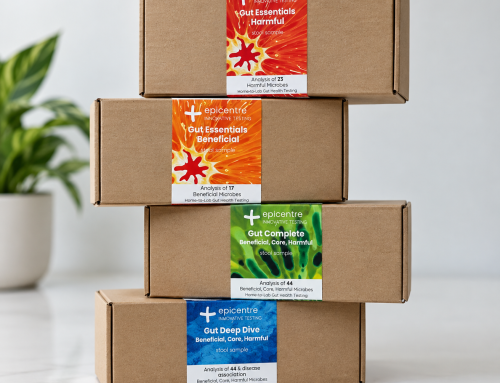
Test for C. difficile at Epicentre
C. difficile is included in the Complete Gut Profile and Gut Deep Dive. No referral needed.