How to Improve Your Gut Health
To improve your gut health, eat more fibre and plant variety, add fermented foods, cut processed sugar and ultra-processed food, manage stress and sleep, move your body, stay hydrated, and use prescription medication only when you need it. Most people feel a difference within two to four weeks, and the microbiome itself shifts over a few months.
- Fibre and plant variety are the single biggest lever: aim for around thirty different plants a week.
- Add a daily fermented food such as amasi, and cut sugary and ultra-processed food.
- Sleep, movement, stress control and clean water all shape your gut.
- Most people feel a difference in two to four weeks; the microbiome itself shifts over two to three months.
- South African guts differ from the Western guts most advice is based on, so a PCR stool test shows your own picture. No doctor's referral.
Below is what actually works, what is mostly hype, how long it takes, and how to tell whether it is working for you. The advice is written for South Africa, where diet, water quality, gut infections and the use of prescription medication all shape gut health, and where the right changes do not have to be expensive.
One thing to know before you start: most gut advice online is built on studies of American and European guts. The largest study of African guts so far, published in Nature in 2025 and led by South African researchers, shows ours are genuinely different. So the foundations below still hold, but the picture is local, and the only way to see your own gut is to test it. More on what that research found below.
The seven changes that actually work
Gut health comes down to feeding the beneficial bacteria in your microbiome and not feeding the harmful ones. These seven habits do most of the work.
1. Eat more fibre and plant variety
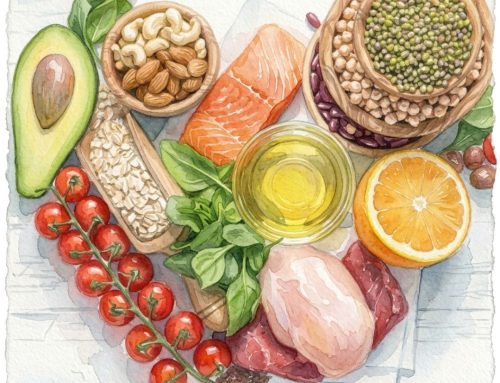
Fibre is the single most important lever. Beneficial bacteria ferment it into compounds that feed your gut lining and calm inflammation. Variety matters as much as quantity: aim for as many different plants across a week as you can, ideally around thirty, counting vegetables, fruit, legumes, whole grains, nuts and seeds. The South African gut research makes this concrete: as people move from rural diets to city eating, they lose the fibre-fermenting microbes that thrive on plants and starch. Fibre is how you keep them.
2. Add a fermented food every day
Fermented foods deliver live cultures and the compounds they produce. A daily serving is one of the most reliable ways to raise microbial diversity.
3. Cut processed sugar and ultra-processed food
Sugar and heavily processed food feed harmful microbes such as Candida and crowd out beneficial species. You do not have to be perfect: cutting sugary cold drinks, sweets and packaged snacks back to occasional treats is where most of the gain is.
4. Manage stress, sleep and movement
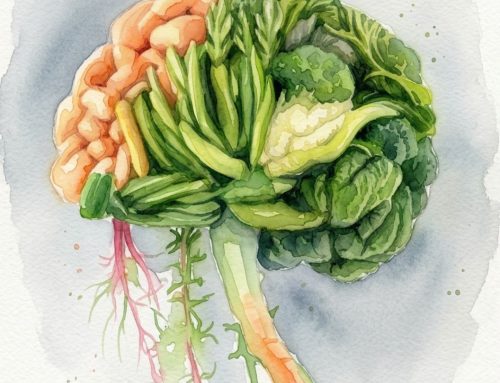
Your gut and brain are wired together. Chronic stress and poor sleep raise cortisol, which alters gut motility and bacterial balance, while regular movement is linked to greater microbial diversity. A University of Cape Town review traces exactly this loop, how gut microbes and the stress hormone system shape each other and affect mood and memory. Aim for steady sleep, a daily walk and a way to wind down. These cost nothing and matter more than most people expect.
5. Stay hydrated
Water supports the mucosal lining of the intestines and helps fibre do its job. If your tap water quality is unreliable, use a filter or boil and cool it, since repeated gut infections set your microbiome back.
6. Use prescription medication wisely
Some prescribed courses clear a needed infection but also reduce beneficial bacteria along the way. Take them only as directed and never share or stockpile them. Eating fermented foods and fibre during and after a course helps your gut recover faster.
7. Be consistent, not perfect
The microbiome responds to what you do most days, not to a single good week. A few steady habits beat an intense cleanse that you cannot keep up.
What South African research shows about your gut
South African guts are not the same as the Western guts most advice is based on. The largest study of African guts so far, the AWI-Gen Microbiome Project published in Nature in 2025 and led by the University of the Witwatersrand, looked at more than 1,800 people across rural villages, the Soweto township and other sites. Three findings are worth carrying with you.
01City living reshapes your gut, and not for the better
Where you live turned out to be the strongest single influence on gut composition, ahead of diet or any disease. As people shifted from rural to city diets, they lost fibre-fermenting microbes and gut diversity dropped. Guts in post-industrial Soweto looked markedly different from guts in semi-rural areas only a few hundred kilometres away. The lesson is not to romanticise village life, it is that the move to processed, low-fibre city eating has a measurable cost, and fibre is how you push back.
02Local guts carry microbes the world has not catalogued
The study turned up 1,005 bacterial genomes and tens of thousands of viruses that simply do not appear in the global reference databases the rest of the world relies on. In plain terms, a lot of standard gut advice and many off-the-shelf tests are tuned to a Western map that does not fully match what is actually living in a South African gut. That is the strongest reason to look at your own gut rather than assume the averages apply to you.
03HIV changes the gut more than almost anything else
Of all the health conditions measured, HIV status was the single biggest disease-related driver of gut composition, ahead of weight and blood pressure. HIV weakens the gut barrier, which lets microbes leak across it and drive ongoing inflammation, and people living with HIV, including those on treatment, tended to have lower gut diversity. Given how common HIV is here, this matters for a lot of people, and it is one more reason a clear picture of your gut is useful. South Africa also carries a heavy tuberculosis burden, and a growing body of work links gut bacteria to how the body handles that infection too.
This is not distant research for us. Epicentre's head of laboratory, Prof Veron Ramsuran, who developed our gut panels, is a published authority on the South African gut microbiome and senior author of a 2025 review on this exact question.
You cannot read any of this off your symptoms. A PCR stool test is the one way to see your actual gut: which beneficial bacteria, harmful microbes, parasites and H. pylori are present, so you stop guessing and act on your own numbers rather than someone else's averages.
What about supplements?
Supplements are a popular search, so here is an honest take. They can help in specific cases, but for most people food does more, and a supplement cannot fix a poor diet.
Probiotics can be useful, but effects are strain-specific and often temporary, so a daily fermented food is usually a better everyday habit. Magnesium supports muscle relaxation and regular bowel movements, which is why it helps some people with constipation, though its effect on the microbiome itself is indirect. Apple cider vinegar is widely searched but the evidence for gut benefits is thin; in moderation it is harmless, but it is not a fix. Kefir is worth having, but as a food rather than a capsule. If you are spending money, spend it on a varied diet first.
How long does it take to improve gut health?
Bloating and irregularity often ease within one to two weeks of more fibre and fermented foods. Energy, skin and how often you get ill tend to follow over a month or two. The actual composition of your microbiome shifts more slowly, over roughly two to three months of consistent habits. There is no overnight fix, which is exactly why guessing for months is a waste when a test can show you where you stand now.
How to see your own gut, not the averages
You can change your gut, but you cannot see inside it, and the research above is the clearest reason not to rely on Western averages. If symptoms keep coming back, if you have had repeated gut infections or prescription courses, or you simply want a baseline, a PCR stool test shows exactly which beneficial bacteria, harmful microbes, parasites and H. pylori are present.
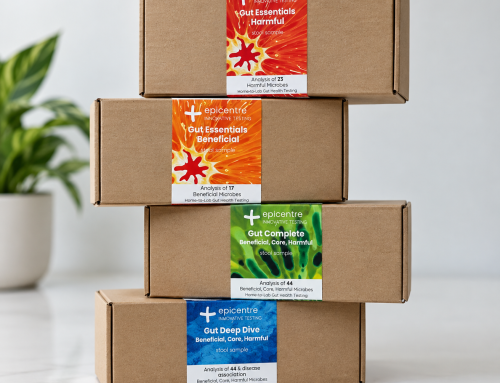
Our most affordable option, the Gut Essentials Harmful Microbes Panel, checks 23 harmful microbes including H. pylori for R2,500. For a fuller picture, the Complete Gut Profile reads 44 microbial targets at R4,500, and the Gut Deep Dive adds a disease-association report. Order a home collection kit, or walk in at Observatory in Cape Town, Hillcrest in Durban or Parktown North in Johannesburg. No doctor's referral.
Frequently asked questions
How can I improve my gut health quickly?
Start by adding fibre and a fermented food such as amasi or plain yoghurt every day, cutting sugary drinks and ultra-processed snacks, and improving your sleep. Many people feel less bloated within a week or two, though the underlying microbiome takes a few months to shift.
How long does it take to improve gut health?
Symptoms like bloating often ease within one to two weeks of eating more fibre and fermented foods. The composition of your gut microbiome changes more slowly, over roughly two to three months of consistent habits.
Can I improve my gut health without supplements?
Yes. For most people, food does more than pills: a varied high-fibre diet, daily fermented foods, less sugar, good sleep, movement and water are the foundation. Supplements are optional extras, not the main lever.
What is the fastest way to fix gut health?
There is no overnight fix, but the fastest reliable progress comes from a few changes at once: more plant variety and fibre, a daily fermented food, far less sugar, and better sleep and stress control. If symptoms persist, a stool test shows what is actually out of balance so you stop guessing.
How do I know if my gut is healthy?
Regular comfortable digestion, steady energy, clear skin and infrequent illness are good signs. The only way to see what is actually in your gut, including beneficial bacteria, pathogens, parasites and H. pylori, is a PCR stool test. No doctor's referral is needed.
How do I heal my gut naturally?
Feed the beneficial bacteria and stop feeding the harmful ones: eat a wide variety of plants and fibre, add a fermented food such as amasi every day, cut sugary drinks and ultra-processed food, sleep well, move, and stay hydrated. Most healing is about consistency over a few months, not a cleanse or a supplement.
Is gut health advice the same for everyone?
No. Most popular advice is built on studies of American and European guts. The largest study of African guts, published in Nature in 2025 and led by South African researchers, found that hundreds of microbes in local guts do not even appear in global reference databases, and that city living strips out fibre-fermenting microbes. The foundations still apply, but the only way to see your own gut is to test it.
Sources
Peer-reviewed research, located via PubMed:
- Maghini DG and colleagues. Expanding the human gut microbiome atlas of Africa. Nature, 2025. doi.org/10.1038/s41586-024-08485-8
- Mntambo N, Arumugam T, Pramchand A, Pillay K, Ramsuran V. A Review of Global Patterns in Gut Microbiota Composition, Health and Disease: Locating South Africa in the Conversation. Microorganisms, 2025. doi.org/10.3390/microorganisms13122831
- Rusch JA, Layden BT, Dugas LR. Signalling cognition: the gut microbiota and hypothalamic-pituitary-adrenal axis. Frontiers in Endocrinology, 2023. doi.org/10.3389/fendo.2023.1130689
- Liu Y and colleagues. Gut microbiota and tuberculosis. iMeta, 2025. doi.org/10.1002/imt2.70054
- May W, Goedecke JH, Conradie-Smit M. The science of obesity. South African Medical Journal, 2025. doi.org/10.7196/SAMJ.2025.v115i9b.3600
This guide is general information, not medical advice, and it does not replace care from a doctor. If you have severe, lasting or worsening symptoms, blood in your stool or unexplained weight loss, see a doctor.