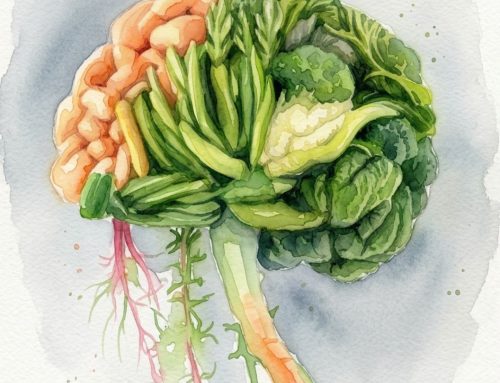
How to improve your gut health, and how to tell if it worked
There's a whole aisle of teas, powders and pills promising to fix your gut, and most people buying them have never measured a single thing about theirs. Here's what actually helps, according to our own gut reports, and how you'd know whether any of it made a difference.
The short version: eat more fibre and more different plants, add fermented foods, sleep 7 to 9 hours, move most days, and cut back on sugar, ultra-processed food and alcohol. That's most of it. The part nobody tells you is that different foods feed different bacteria, so what works depends on which ones you're actually short of, and the only way to know that is to look.
In short
- Fibre and plant variety do more for your gut than any supplement on the shelf.
- Fermented foods aren't a fad. Sauerkraut, kimchi, kefir and kombucha each feed different bacteria, and we can name which.
- Sleep, exercise and stress really do change your microbiome. So does alcohol, in the other direction.
- Probiotic supplements can help, but only some strains, and only if you're short of them.
- A gut test before and after tells you whether the year you spent on kefir actually did anything.
No doctor's referral, no appointment. Collect the sample at home or pick a kit up at a branch in Observatory, Parktown North or Hillcrest. Results in 14 working days.
What is gut health, actually?
Your gut runs from your mouth to the other end, and along the way it breaks down food, pulls out the nutrients and gets rid of what's left. That part most people know.
The part that matters here is what lives in it. Your gut houses an enormous community of bacteria, and they aren't just passengers. They break down the fibre you can't digest yourself, they make vitamins including B vitamins and vitamin K, they help train your immune system to tell friend from foe, and they produce compounds that affect your mood and stress response through what's called the gut-brain axis.
When that community gets out of balance, the word for it is dysbiosis, and it's been linked to inflammatory bowel disease, to infections, and through the gut-brain axis to anxiety and depression.
So "good gut health" isn't really about your stomach feeling settled. It's about having enough of the right bacteria, and not too much of the wrong ones.
What should I eat for better gut health?
Fibre, and lots of different plants. That's the short answer and it hasn't changed in twenty years, however many new powders arrive.
Your good bacteria live on the parts of plants you can't digest. Feed them and they multiply. Starve them and they don't. Faecalibacterium prausnitzii, one of the most abundant bacteria in healthy adults, lives on resistant starch and produces butyrate, which is what actually nourishes the cells lining your colon and keeps inflammation down.
Resistant starch is worth knowing about because it's easy. Cook potatoes or rice and let them cool, and some of the starch changes into a form you can't digest but your bacteria love. Cold potato salad is a gut health food. So are oats, barley, legumes and whole grains.
Then fermented foods, which is where the search trends and the science have finally met. Kombucha searches are up 150% in South Africa this year, sauerkraut 80%, kimchi 60%. People aren't wrong about this one.
Which food feeds which bacteria?
This is the bit that gets left out of most gut health advice, and it comes straight off our own reports. When a gut panel shows you're low on something specific, it tells you what to eat for that particular organism. Different bacteria want different things.
| Bacteria | What it does | What feeds it |
|---|---|---|
| Akkermansia muciniphila | Maintains the mucus layer lining your gut. Anti-inflammatory. | Polyphenol-rich foods: pomegranate, cranberries, green tea. Fibre. |
| Faecalibacterium prausnitzii | Produces butyrate, which feeds your colon cells and lowers inflammation. | Resistant starch: cooled potatoes, legumes, oats, barley. |
| Bifidobacterium species | Break down fibre, support immunity, make vitamins. | Kefir, yoghurt, buttermilk, inulin and other prebiotic fibres. |
| Lactobacillus genus | Acidifies the gut so harmful microbes struggle to compete. | Sauerkraut, kombucha, fermented foods generally. |
| Lactobacillus plantarum | Survives stomach acid; helps repair the gut lining. | Sauerkraut, sourdough, fermented olives. |
| Lactobacillus gasseri | Immune modulation; linked to weight and vaginal health. | Kimchi, probiotic yoghurt. |
| Lactobacillus paracasei | Immune defence, skin and respiratory health. | Pickled vegetables, kefir. |
| Roseburia hominis | Another butyrate producer. Anti-inflammatory. | Whole grains, flaxseed, resistant starch. |
| Streptococcus thermophilus | Helps you digest lactose. | Yoghurt and cheese. |
Read down the right-hand column and you'll notice something. It isn't one magic food. Sauerkraut and kombucha do a different job from kefir, and neither does what cold potatoes and oats do. Variety isn't a nice-to-have, it's the actual mechanism.
And this is why testing changes the advice. If you're low on Faecalibacterium, more resistant starch is the answer and no amount of kombucha will fix it. If you're low on Lactobacillus, it's the other way round. Generic gut health advice tells everyone to do everything. A report tells you which column applies to you.
What should I cut back on?
Three things, and they're the ones our reports flag most often.
Sugar and artificial sweeteners. Both encourage the growth of harmful bacteria and yeasts. Candida albicans, which sits in most people's gut harmlessly, is the one that takes advantage of a high-sugar diet.
Ultra-processed food. The problem isn't only what's missing from it. Emulsifiers, the additives that keep processed food smooth and stable, can disrupt the gut lining itself.
Alcohol. It kills off beneficial bacteria and unbalances what's left. You don't have to be drinking heavily for it to show.
There's a fourth one that isn't food. Don't take antibiotics you don't need. They work, they're necessary when they're necessary, and they also flatten your gut bacteria along with whatever they were prescribed for. If you're on a course, that's a good time to be eating fermented foods and taking a probiotic.
Do sleep and stress really affect your gut?
Yes, and more than most people expect. This isn't wellness hand-waving, it's in the recommendations we give every patient whose report comes back needing work.
Sleep 7 to 9 hours
Poor sleep disrupts microbial diversity and balance. It's the least glamorous item on this list and probably the highest-yield one, because it's free and most South Africans aren't getting it.
Manage the stress you can manage
Chronic stress changes your microbiome, through the same gut-brain axis that lets your gut bacteria influence your mood. It runs both ways. Mindfulness, meditation and regular movement all help.
Move most days, moderately
Moderate exercise supports a healthy microbiome. Walking, cycling and swimming are all fine. You don't need to train for anything.
Do probiotic supplements actually work?
Some of them, for some people. It depends on the strain and on whether you were short of it in the first place.
The strains our reports point to are Lactobacillus rhamnosus, Bifidobacterium lactis and Saccharomyces boulardii, which is a beneficial yeast rather than a bacterium. If a bottle doesn't name its strains, you don't know what you're buying.
Prebiotics are the other half of it, and they're less well known. They aren't bacteria, they're the food bacteria live on: inulin, fructooligosaccharides and galactooligosaccharides. There's not much point adding bacteria if there's nothing for them to eat.
But here's the honest part. A supplement is a guess unless you know what you're low on. That's not an argument against taking one. It's an argument for finding out first, especially if you're about to spend R300 a month on it for a year.
How would I know if any of this worked?
You'd measure it. That's the whole argument for testing, and it's a smaller argument than most labs make.
Nothing on this page requires a test. Eat more plants, sleep properly, drink less: you can do all of it tomorrow and it will probably help. What a test gives you is two things a symptom diary can't.
It tells you which column applies to you. Whether you're short of the butyrate producers or the Lactobacillus, because the food that fixes one won't fix the other.
It gives you a before and an after. If you change your diet for six months, the only way to know whether it landed is to have measured where you started.
The starting point: Gut Essentials Test
R2,500A 17-target screen of the beneficial bacteria: the Bifidobacterium and Lactobacillus species, Akkermansia, Faecalibacterium, Roseburia and Streptococcus thermophilus. In other words, exactly the organisms in the table above.
This is the one to take if you're about to change how you eat and want to know where you're starting from. It doesn't look for pathogens or parasites.
Answers: which beneficial bacteria am I short of?
Doesn't answer: whether anything harmful is there.
The full picture: Complete Gut Profile
R4,50044 targets: the 17 beneficial bacteria, 8 core bacteria, 9 harmful pathogens, 5 E. coli strains, 4 parasites and H. pylori. Take this one if something is actually wrong rather than if you're optimising.
Answers: what's in there, good and bad.
Sample: stool, collected at home.
There's also a Gut Deep Dive at R5,950, which adds a disease-association report to the same 44 targets. And if you only want to know about H. pylori, that's a standalone stool test at R269, not a gut panel. Everything is on the gut health page. Our gut panels were developed and are overseen by Prof Veron Ramsuran, our head of laboratory. Prices are 2026 cash rates including VAT and may change; in-store pricing applies.
How often should I retest?
Every 12 months is the general answer. Test sooner if your symptoms change noticeably, if something big happens health-wise like a pregnancy, major surgery or a new chronic illness, or if you travel somewhere with a very different diet and pick up unfamiliar microbes.
Two practical things before you collect: stop probiotic supplements 2 weeks beforehand, or you'll be measuring the supplement rather than yourself, and wait 2 weeks after finishing any antibiotics. You don't need to change your diet otherwise.
Basically
Eat more plants and more kinds of plants. Add something fermented. Sleep. Move. Drink less. Don't take antibiotics you don't need.
That's 90% of gut health and none of it costs anything. The remaining 10% is knowing which bacteria you're personally short of, because sauerkraut and cold potatoes feed completely different things, and right now you're guessing which one you need.
Find out where you're starting from
A stool sample you collect at home, no doctor's referral, results in 14 working days. Then change what you eat, and test again in a year to see if it landed.
Frequently Asked Questions
How do I improve my gut health?
Eat more fibre and a wider variety of plants, add fermented foods like sauerkraut, kimchi, kefir and kombucha, sleep 7 to 9 hours, exercise moderately most days, and cut back on sugar, ultra-processed food and alcohol. Avoid antibiotics you don't need. Different bacteria are fed by different foods, so variety matters more than any single item, and a gut test tells you which ones you're actually short of.
What foods are best for gut health?
It depends which bacteria you want to support. Resistant starch from cooled potatoes, legumes, oats and barley feeds Faecalibacterium prausnitzii, a major butyrate producer. Sauerkraut and kombucha feed Lactobacillus. Kefir, yoghurt and buttermilk feed Bifidobacterium. Kimchi supports Lactobacillus gasseri. Polyphenol-rich foods like pomegranate, cranberries and green tea support Akkermansia muciniphila, which maintains your gut lining. Whole grains and flaxseed support Roseburia hominis.
Do probiotic supplements work?
Some strains, for some people. The strains our gut reports point to are Lactobacillus rhamnosus, Bifidobacterium lactis and Saccharomyces boulardii. If a product doesn't name its strains you don't know what you're buying. Prebiotics matter too: inulin, fructooligosaccharides and galactooligosaccharides are the food those bacteria live on. A supplement is a guess unless you know which bacteria you're low on.
What is dysbiosis?
An imbalance in the community of microbes living in your gut, where the harmful organisms have too much of a share and the beneficial ones too little. It's been linked to gastrointestinal conditions like inflammatory bowel disease, to infections, and through the gut-brain axis to anxiety and depression.
How much does a gut health test cost in South Africa?
At Epicentre the Gut Essentials Test is R2,500 and screens 17 beneficial bacteria. The Complete Gut Profile is R4,500 and covers 44 targets including pathogens, parasites and H. pylori. The Gut Deep Dive is R5,950 and adds a disease-association report. All three are stool samples you collect at home, no doctor's referral is needed, and results take 14 working days.
How often should I test my gut microbiome?
Every 12 months as a general rule. Test sooner if your symptoms change noticeably, if you have a major health event like a pregnancy, major surgery or a new chronic illness, or if you travel somewhere with a very different diet. Stop probiotic supplements 2 weeks before collecting, and wait 2 weeks after finishing any course of antibiotics.
Can I fix my gut health without testing?
Largely, yes. Fibre, plant variety, fermented foods, sleep, exercise and less alcohol will help most people and none of it needs a laboratory. What testing adds is which beneficial bacteria you're personally short of, since different foods feed different organisms, and a baseline to compare against if you want to know whether the changes you made actually worked.
What these words mean
- Microbiome
- The whole community of bacteria and other microbes living in your gut. Yours is different from everyone else's.
- Dysbiosis
- When that community is out of balance, with too few beneficial microbes or too many harmful ones.
- Probiotic
- A live beneficial bacterium, whether in a supplement or in a fermented food.
- Prebiotic
- Food for those bacteria rather than the bacteria themselves. Inulin, fructooligosaccharides and galactooligosaccharides are the common ones.
- Resistant starch
- Starch you can't digest but your bacteria can. Cooking potatoes or rice and letting them cool creates it.
- Butyrate
- A short-chain fatty acid your bacteria make from fibre. It feeds the cells lining your colon and reduces inflammation.
- Gut-brain axis
- The two-way communication between your gut and your brain, through nerves, hormones and the immune system. It's why stress affects your gut and your gut affects your mood.
This article is general health information and not medical advice. Epicentre is a diagnostic laboratory: we provide testing and reporting, and we don't diagnose, prescribe or treat. The dietary guidance here comes from the recommendations in our own gut health reports and is general rather than personal. If you have persistent digestive symptoms, blood in your stool, or unexplained weight loss, please see a doctor rather than changing your diet and waiting.