Lactobacillus plantarum: Your Gut's Barrier Fortifier | Epicentre
🦠 Beneficial Probiotic · Antimicrobial Producer

Lactobacillus plantarum: Your Gut's Barrier Fortifier

Found in kimchi, sauerkraut, and pickles, L. plantarum is one of the toughest probiotics. It survives extreme conditions, produces antimicrobial compounds, and has the strongest evidence for gut barrier repair and IBS symptom reduction.

✓ Beneficial probiotic 🧬 Detectable by PCR stool test 🏥 No referral needed
299v
clinically studied
barrier repair strain
🩺
Medically Reviewed
Dr. Samantha Naidoo
MB ChB, FCP (SA) · Medical Director, Epicentre Laboratories
Last reviewed: 19 March 2026
At a glance

Why does L. plantarum matter?

299v
clinically studied for IBS and barrier repair
Ducrotté et al., 2012
🛡️
one of the strongest barrier-repair probiotics
Tight junction specialist
💪
produces plantaricins (natural antimicrobials)
Pathogen fighter
🔥
reduces IBS bloating and pain
Clinical trial evidence
PCR
detectable in all Epicentre gut tests
Walk-in or home kit

Could Your L. plantarum Levels Be Low?
6 quick questions. Not a diagnosis, but it may help you decide whether testing is worthwhile.

How it works

What does L. plantarum actually do in your gut?

🛡️
Fortifies gut barrier
L. plantarum 299v significantly increases tight junction protein expression, directly repairing leaky gut. One of the strongest evidence bases for barrier repair.
💪
Produces antimicrobial compounds
Generates plantaricins and bacteriocins that inhibit pathogens including E. coli, Salmonella, and Listeria, without harming beneficial species.
🔥
Reduces IBS symptoms
Clinical trials show reduced bloating, pain, and flatulence in IBS patients taking L. plantarum 299v (Ducrotté et al., 2012).
🧬
Survives extreme conditions
One of the hardiest probiotics. Tolerates acid, bile, high salt, and temperature extremes. Thrives in fermented vegetables.

Warning signs

What happens when L. plantarum levels are low?

💨Persistent bloating and flatulence
🔥Abdominal pain or cramping
💩Alternating constipation and diarrhoea (IBS pattern)
🪨Increasing food sensitivities (sign of leaky gut)
🍲Discomfort after meals, even small portions
L. plantarum's speciality is the gut barrier. When levels are low, the barrier weakens, allowing toxins and food particles to trigger immune responses throughout the body.
🔥Joint pain or stiffness linked to systemic inflammation
😴Fatigue and brain fog from endotoxin exposure
🔥Skin inflammation (eczema, acne) triggered by leaky gut
🤧Increased immune reactivity
😟Low mood linked to gut-brain inflammation
Low L. plantarum is not a disease in itself, but it is consistently found in people with these conditions.
🔴IBS: L. plantarum 299v reduced bloating, pain, and flatulence in clinical trials
🔴Leaky gut: one of the strongest probiotics for tight junction repair
🟡IBD: supports barrier integrity and reduces inflammation in Crohn's and colitis
🟡Metabolic syndrome: reduces endotoxin-driven inflammation
🟡Autoimmune conditions: barrier repair reduces immune triggers from gut leakage
"
"L. plantarum 299v is the probiotic I reach for when a patient has clear signs of increased gut permeability. The barrier repair evidence is stronger than almost any other strain. For IBS patients, it is often the turning point."
Dr. Samantha Naidoo, MB ChB, FCP (SA), Medical Director, Epicentre

What happens over time

The progression of low L. plantarum

1
Trigger: antibiotics, NSAIDs, alcohol, or processed diet
All of these directly damage the gut barrier. NSAIDs and alcohol are particularly harmful to tight junctions. Antibiotics remove protective L. plantarum.
2
Tight junctions weaken
Without L. plantarum maintaining barrier proteins, gaps form between gut cells. Small molecules begin crossing into the bloodstream.
3
Immune system activates
The immune system detects foreign molecules and mounts an inflammatory response. Food sensitivities, bloating, and IBS symptoms intensify.
4
Systemic inflammation spreads
Endotoxins in the bloodstream drive inflammation in joints, skin, brain, and liver. Fatigue, brain fog, and skin issues develop.
5
Leaky gut becomes chronic
Without barrier repair, the cycle of permeability, inflammation, and dysbiosis self-perpetuates. L. plantarum supplementation targets the root cause.
The good news: L. plantarum 299v (GoodBelly, Probi) has specific clinical evidence for IBS and barrier repair. It is one of the hardiest probiotics and survives well as a supplement. Improvements typically appear within 4 weeks.

Take action

How to boost your L. plantarum levels

🥦

Fermented vegetables

Kimchi, sauerkraut, pickles, and olives are rich natural sources of L. plantarum.

🍛

Prebiotic fibre

Whole grains, legumes, garlic, onions. L. plantarum thrives on diverse plant fibres.

💊

L. plantarum 299v

The strain with the strongest IBS and barrier evidence. Widely available as a supplement.

🔥

Reduce NSAIDs and alcohol

Both directly damage tight junctions. Reducing them supports barrier recovery.

🥛

Diverse fermented foods

Each fermented food brings different strains. Variety supports ecosystem resilience.

💤

Stress management

Cortisol weakens the gut barrier. Stress reduction supports L. plantarum's repair work.


Testing

Test your L. plantarum levels at Epicentre

All three Epicentre gut packages include L. plantarum quantification. No referral needed. Walk in or test at home.
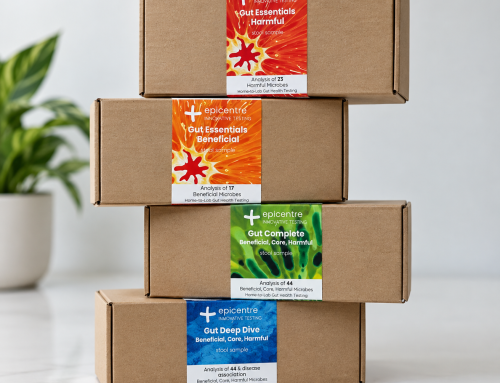

Gut Essentials

✓ Includes L. plantarum
17 probiotic species mapped and quantified.
R1,995
~R499/mo with Payflex · 5% student discount

Complete Gut Profile

✓ Includes L. plantarum + 44 more targets
Full picture: probiotics, pathogens, parasites, fungi, H. pylori.
R4,850
~R1,213/mo with Payflex · 5% student discount

Gut Deep Dive

✓ Includes L. plantarum + disease associations
Everything in the Complete Profile plus disease association analysis.
R5,620
~R1,405/mo with Payflex · 5% student discount

Common questions

Frequently asked questions about L. plantarum

Can I take L. plantarum as a supplement?
Yes. L. plantarum 299v is the most clinically studied strain for IBS and gut barrier repair. Available as GoodBelly and Probi supplements. One of the hardiest probiotics: survives acid, bile, and storage well.
What foods contain or support L. plantarum?
Fermented vegetables are the richest source: kimchi, sauerkraut, fermented pickles, and olives. L. plantarum is one of the dominant species in vegetable fermentation. Also found in some sourdough breads.
How long does it take to restore L. plantarum levels?
With dietary changes and supplementation (where applicable), most people see measurable improvements within 4 to 8 weeks. A follow-up gut test confirms progress.
Do I need a doctor's referral for gut testing?
No. Walk into any Epicentre branch in Durban (Hillcrest), Cape Town (Observatory), or Johannesburg (Parktown North). Or order a home stool collection kit delivered to your door in discreet packaging with prepaid return.
How much does a gut test cost?
Gut Essentials (17 probiotic targets): R1,995. Complete Gut Profile (45 targets): R4,850. Gut Deep Dive (45 targets + disease associations): R5,620. All prices include VAT. Payflex instalments available. Students get 5% off.

Find Out Where Your L. plantarum Stands

Explore other gut organisms
E
Epicentre Walk-In Labs
Practice #1117394 · Founded 2001 · Durban (Hillcrest) · Cape Town (Observatory) · Johannesburg (Parktown North)