
Recurring UTIs, BV or thrush? Our new microbiome sequencing pilot
If your UTIs, BV or thrush keep coming back, or your tests keep saying everything is fine when it doesn't feel fine, a standard test may simply not be looking for the right thing. We're preparing a pilot of new tests, run in South Africa with Prof Veron Ramsuran's laboratory at the University of KwaZulu-Natal (UKZN), that look at every microbe in the sample.
In short
- Who it's for: anyone with UTIs, BV or thrush that keep coming back, or gut symptoms that haven't been explained, and the practitioners looking after them.
- What's new: sequencing (NGS) reads all the bacteria and fungi in a sample, not a short list. Plus gut inflammation markers and optional genetic add-ons.
- When: the pilot opens soon. Prices and turnaround times are still being confirmed.
- What to do now: join the list on WhatsApp, or start with one of our PCR tests and home kits today. No doctor's referral.
Why do some infections keep coming back?
For most people a first UTI or a first bout of BV is simple: a quick test, a course of treatment, done. But for a lot of women it doesn't end there.
Part of the reason is what standard tests can and can't see. A urine dipstick or a culture works well for a simple first infection. When symptoms keep returning, though:
- Many bacteria don't grow in a routine lab culture, so they never show up.
- When several organisms are present, the result often just says "mixed growth".
- A recent course of antibiotics can stop bacteria growing in the lab, so the test comes back clear even when something is there.
In South Africa this matters even more. In many public clinics, discharge and urinary symptoms are treated on symptoms alone, without a lab test, so people with recurrent infections can go years without a clear answer. Studies also suggest that South African women tend to have more varied vaginal bacteria than the populations many overseas tests were designed around.
How is sequencing different?
Think of the microbes in a sample as people at a party.
Targeted PCR
Checks the guest list for specific names. It's fast and tells you exactly how much of each one is there, but it only finds the people you asked about.
Sequencing (NGS)
Takes a photo of the whole room. It shows everyone who's there, including the ones nobody thought to look for, and how much of the crowd each one makes up.
That's why we'll use both: PCR first, because it's quick and gives actual amounts, then sequencing when the PCR is clear or the symptoms keep coming back. You only give one set of samples. We send each test to the right lab.
| Dipstick and culture | Targeted PCR (available now) | Sequencing (NGS, in development) | |
|---|---|---|---|
| What it detects | Organisms that grow in standard culture | The DNA of a set list of organisms | All the bacterial and fungal DNA in the sample |
| Hard-to-grow organisms | Often missed | Only if they're on the panel | Detected |
| Several organisms at once | Often reported as "mixed growth" | Each target reported | The whole community, with each organism's share |
| After recent antibiotics | Can give a false negative | Less affected | Less affected |
| Best for | A simple first episode, with antibiotic sensitivities | A fast first answer, with amounts | Recurrent or unexplained symptoms when PCR is clear |
What's in the pilot?
There are 3 new tests in development. Each card says in plain words what it does, with the detail for practitioners underneath.
Microbiome sequencing
For UTIs, BV and thrush that keep coming back when the usual tests are clear. It shows every bacterium and fungus in the sample and how balanced they are. Vaginal swab first; urine is in development. At a branch or with a home kit.
For practitioners: 16S (bacterial) and ITS (fungal) sequencing. Reports relative abundance, a diversity score and, for vaginal samples, community state type (CST).
Gut inflammation and barrier markers
An add-on to our gut panels, from the same stool sample and on the same report. It shows whether the gut is inflamed and how well its lining is holding up, alongside which microbes are there.
For practitioners: calprotectin, zonulin, and genetic markers for secretor status, lactase persistence, mucosal glycosylation and gut barrier function.
Genetic markers
An optional extra on our UTI and STI panels, for practitioners who want to look into a patient's history further. These markers don't diagnose anything on their own.
For practitioners: PAI-1 4G/5G (SERPINE1), Factor V Leiden (F5) and Prothrombin G20210A (F2). The link with recurrent UTIs comes from early clinical work, not established guidelines. Custom panels can be designed with the lab.
What would a sequencing result look like?
Illustrative, not patient data
In plain words: the protective bacteria are low and BV-type bacteria make up a large share. Your practitioner would read this alongside your symptoms. (Technically: community state type IV, low Lactobacillus.)
What can I test today?
You don't have to wait for the pilot. Targeted PCR is the first step anyway, and it's available now at any branch or as a home kit, with no doctor's referral.
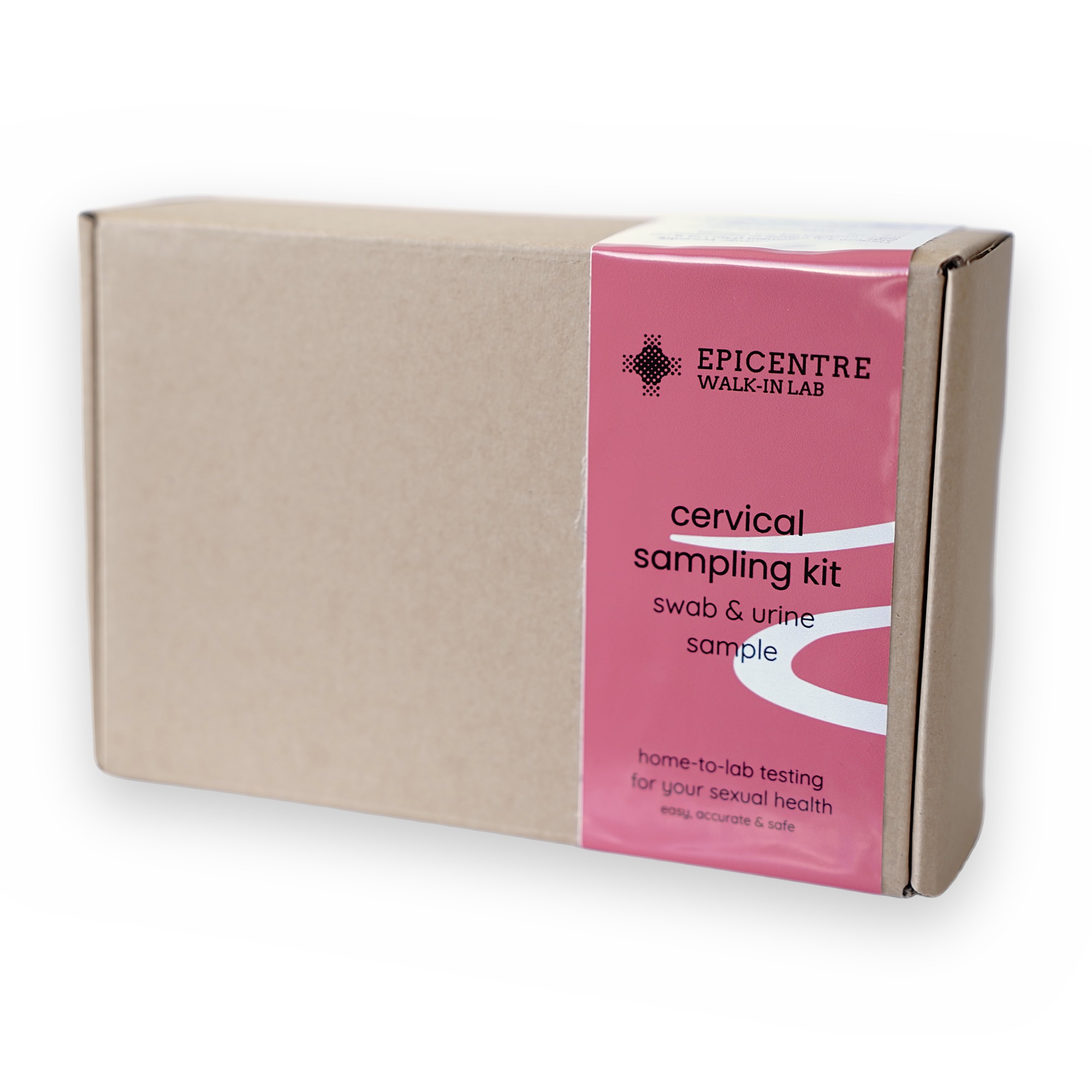

How does the home kit work?
- Order online. We courier the kit to you anywhere in South Africa for R300, in plain packaging.
- Take your sample at home, following the printed steps in the box.
- Send it back in the prepaid return packaging, or drop it at a branch. Your results come by email.
| Test | Price | What it covers |
|---|---|---|
| UTI PCR panel | R1,609 | 11 bacteria and yeasts behind urinary tract infections, including 7 Candida species. Urine sample. Results in 5 to 7 working days. |
| BV & Vaginal Microbiome Screen | R1,609 | 17 targets: the bacteria behind BV, such as Gardnerella vaginalis and Atopobium vaginae, and the protective lactobacilli. Vaginal self-swab. Results in 5 to 7 working days. |
| Gut PCR panels | R2,500 to R5,950 | Gut Essentials, Complete Gut Profile or Gut Deep Dive. Stool sample at home. Results in 14 working days. |
| Functional Health Analysis | R4,584 | A 16-marker blood panel with reports for you and your practitioner. Results in 2 to 5 working days. |
For practitioners
We're opening the pilot to practitioners first: integrative and functional doctors, GPs, women's health practitioners and nutritional therapists. You'll help shape which tests and panels we offer.
- Two-step workflow: targeted PCR first for a fast, quantitative answer, then sequencing when PCR is clear or symptoms recur. One set of samples covers both.
- What the sequencing report shows: relative abundance of every bacterial (16S) and fungal (ITS) taxon detected, a diversity score and, for vaginal samples, community state type.
- Results to you and your patient: as a referring practitioner, results can come to you as well as to your patient.
- Local: run in South Africa, so no international shipping, priced in rand, and reference data that reflects local patients. It works in a similar way to the overseas sequencing tests you may already use.
- Custom panels: the lab can design genetic marker panels on request.
Final marker lists, minimum sample numbers, prices and turnaround times are being confirmed with the lab now. Practitioners on the list will hear first.
What are the limits?
- Sequencing finds DNA, so it can't tell whether an organism is alive.
- It shows each organism's share of the sample, not exact amounts. Exact amounts come from PCR.
- Culture with sensitivities is still the reference for choosing an antibiotic.
- The genetic markers support an investigation led by your doctor or practitioner. They aren't diagnostic on their own.
- Final marker lists, prices and turnaround times are still being confirmed.
Basically: sequencing is a second step for the infections that keep coming back. The tests that already work still come first. We test; your doctor or practitioner reads the results with you and decides on treatment.
Questions people ask
Do I need a doctor's referral?
Not for any of our current tests. We'll confirm how the pilot tests work, including whether any need a practitioner, when it opens. If you have a practitioner, we can send your results to them too.
When does the pilot open and what will it cost?
We're still confirming prices, turnaround times and the start date with the lab. Join the list on WhatsApp and we'll message you as soon as it opens.
Should I wait for sequencing, or test now?
Test now if you have symptoms. Targeted PCR is the first step anyway: it's fast and gives actual amounts. Sequencing is for when the PCR is clear or symptoms keep coming back.
Can I do it at home?
Yes. Our current kits are self-collected at home and couriered anywhere in South Africa for R300, with prepaid return packaging. The sequencing tests are planned for home kits and branches too.
Will the results tell me what treatment I need?
No. We test; we don't diagnose or treat. Your doctor or practitioner reads the results alongside your symptoms and history and decides what to do next.
Want to hear when the pilot opens?
Tap a button below. WhatsApp opens with a short message ready to send, and we'll message you when the pilot opens.
We'll only use your number to tell you about the pilot. Reply STOP at any time.
References
- Foxman B. Epidemiology of urinary tract infections: incidence, morbidity, and economic costs. Am J Med 2002;113(Suppl 1A):5S-13S.
- Bradshaw CS, Morton AN, Hocking J, et al. J Infect Dis 2006;193(11):1478-86.