The STI testing questions our nurses get asked every day
The ones you might be too embarrassed to Google. Sister Lucia at our Parktown North lab in Johannesburg and Sister Lindiwe at our Observatory lab in Cape Town answer them the way they do at the desk: plainly, privately and without judgement.
In short
- Privacy: you can test under any name you like, with results sent to a private email. Nobody has to say “STI test” out loud.
- Timing: don't test the morning after. PCR panels need 1 to 2 weeks. HIV needs 2 to 4 weeks for a 4th-generation lab test and 12 weeks to confirm.
- No symptoms: feeling fine isn't the same as being clear. About 1 in 4 people who test with no symptoms have something.
- Myths: toilet seats don't give you STIs, and “just in case” antibiotics cause more problems than they solve.
- If you test positive: nobody here will judge you. We don't prescribe, but we'll connect you with a doctor who can.
Who's answering
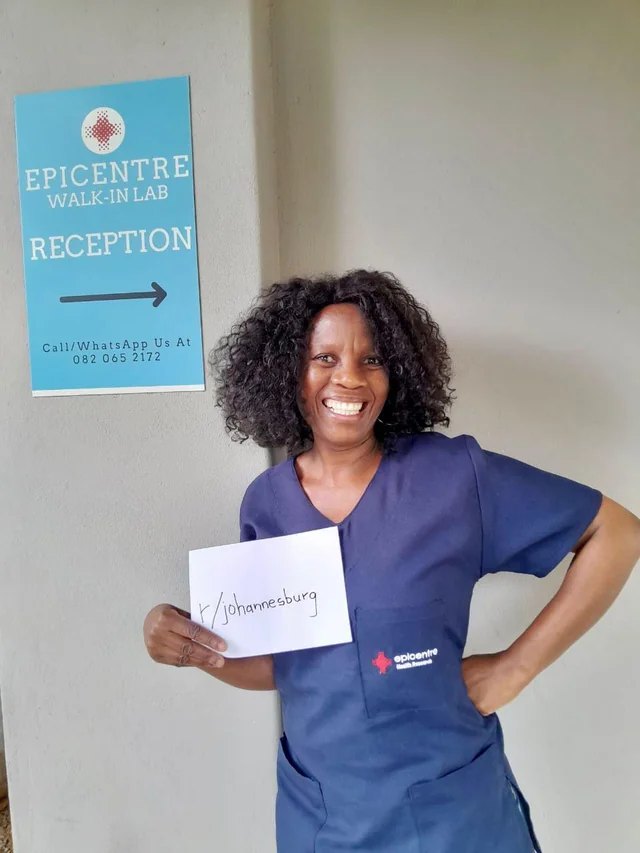
With Epicentre since 2022. Came to the walk-in lab from our research teams, and before that worked in a public clinic, which is where a lot of these answers come from.
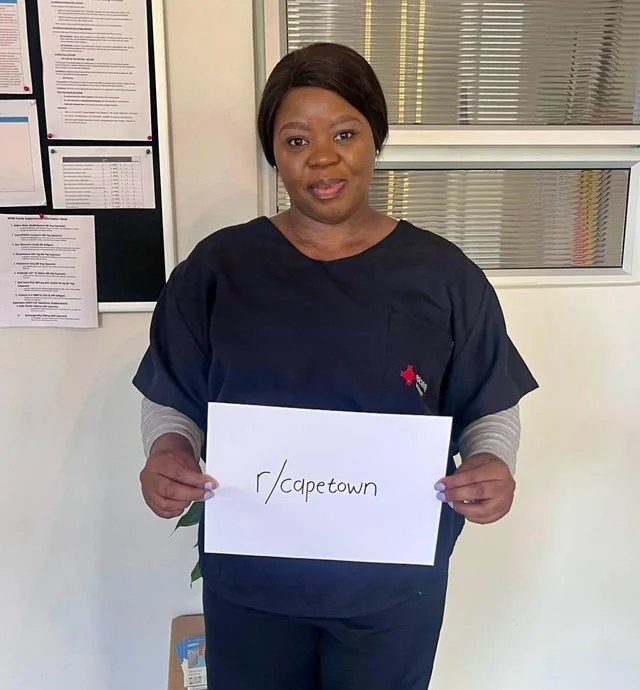
Our nurse at Observatory since early 2025. Sees a lot of people who've spent weeks in a “panic loop” on Google before coming in, and would rather they just asked. Her favourite part of the job? “Honestly, I just love phlebotomy.”
Epicentre runs nurse-led walk-in labs in Observatory (Cape Town), Parktown North (Johannesburg) and Hillcrest (Durban), with no doctor's referral needed. These questions come from two places: what people ask at our desks, and the two Reddit AMAs the nurses ran in February 2026, Sister Lucia on r/johannesburg and Sister Lindiwe on r/capetown. The answers are condensed from what they said there, with the numbers checked against our current test menu.
Privacy and the awkward bit
The questions people ask quietly at the desk, or don't ask at all.
Can I test anonymously? I don't want this on my medical aid.

Yes. Just say “I'd like to test anonymously” when you check in. Give us any name you like and an email address only you can see. Pay cash or card. We don't submit anything to your medical aid, nobody gets an SMS, and there's no paper trail. Your results go to that email and nowhere else.
One tip: remember the name you used. It's the only way we can match your results to you.
I'm too embarrassed to say “STI test” out loud in the waiting room.

You never have to say those words. Ask for a package by its name, “the Medium” or “the Large”, or just show us the page on your phone. All the questions happen in a private room with the door closed. Nobody in the waiting area hears anything.
Can my partner come with me for support?
Yes! Lots of couples test together before they stop using condoms. You can be in the room together or separately, your choice. Just tell us when you arrive.
And it's a good idea for another reason. If one of you tests positive and the other never tests, the infection just goes back and forth. Whatever your result, your partner should be tested too.
How do I ask a partner to get tested without it sounding like I don't trust them?
This is the question I get most. Change how you frame it. Instead of making it about trust, make it about the two of you being open and relaxed together. Something like: “I want to take this to the next level. Could we get tested together, so we can both relax and not stress about anything?”
If they react badly, honestly, that's a red flag for me. Someone who won't help you stay healthy isn't someone you want to be having sex with.
Show 1 more question
What if I test positive? Will you judge me?
Never. We see this every single day. You're not the first and you won't be the last. Most bacterial STIs, chlamydia and gonorrhoea included, clear with a course of antibiotics from a doctor, and even syphilis is curable when it's caught.
We're a laboratory, so we don't prescribe. What we do is make the next step easy. Your report tells a doctor exactly what was found, and if you don't have one, we can connect you with a doctor who already knows how our reports work. No lectures, just the next step.
Timing: when and how often to test
Testing too early is the most common way to waste money on a test.
I had unprotected sex last night. Can I test today?
You can, but it won't tell you much yet. An infection needs time to multiply before any test can find it. For the PCR panels, wait 1 to 2 weeks. For HIV, the 4th-generation lab test picks it up from about 2 to 4 weeks, and a confirmed negative is at 12 weeks. Syphilis is 3 to 6 weeks.
So the sensible plan is a PCR panel in 1 to 2 weeks, then the blood tests at 6 weeks. Come and see us and we'll work out the timing for your situation.
One exception, and it matters: if you think you've been exposed to HIV, don't wait for a test at all. PEP, the 28-day course that stops HIV taking hold, has to start within 72 hours and works best in the first 24. Go straight to a clinic or emergency room. We don't offer PEP, but they do.
Isn't it 3 months before HIV shows up?
That rule is out of date. The old antibody tests needed up to 3 months. The 4th-generation lab test we use looks for the virus's p24 antigen as well as antibodies, so it detects most infections from 2 to 4 weeks after exposure.
The part most people don't know is that someone who was infected recently is at their most infectious, because the virus is multiplying fast, even while they're still testing negative. That's why a recent negative result from a new partner isn't the whole story, and why the 12-week confirmation still matters.
Should I test if I have no symptoms? How often?
Yes, 100%. I always recommend screening even if you feel perfect, because silent infections like chlamydia or Mycoplasma genitalium often show no symptoms while they're active.
Once a year is a good routine check. Add a test if you've had a close call, or before you stop using condoms with someone new. After a possible exposure, wait 1 to 2 weeks before a PCR test, or the lab might miss it.
I've had one partner for years. Why would I need a test?
It's not about trust. Some infections sit quietly for years before anyone notices. HPV, herpes, Mycoplasma genitalium and even syphilis can be there from a previous relationship without either of you ever feeling ill.
What I see more often in long relationships is the ping-pong pattern: one partner has recurring BV or thrush, gets tested, and the other partner never does. The two of you just pass it back and forth. A test for both of you, once, breaks the loop. Think of it like a yearly blood pressure check, not an accusation.
What we see in the lab
What actually comes back positive, and who it surprises.
I feel fine. Doesn't that mean I'm fine?
Not necessarily. In our lab, roughly 1 in 4 people who come in for a routine screen with no symptoms at all test positive for at least one infection. Chlamydia, Mycoplasma genitalium, ureaplasma, HPV, herpes and early syphilis are all routinely silent.
Feeling fine tells you that you feel fine. A PCR test tells you what's there.
Which STIs surprise people most?
Chlamydia and Mycoplasma genitalium. They usually cause no symptoms, so people carry them and pass them on without knowing.
Syphilis surprises people too. They think of it as old-fashioned, but I've seen a big rise in Joburg. It often starts with a single painless sore that goes away on its own, so people think they're fine while the infection moves deeper into the body.
Can you have gonorrhoea or syphilis with no symptoms at all?
Yes, and it's really common. Gonorrhoea can live in the throat or rectum with no symptoms. Syphilis is known for a small, painless sore that disappears while the infection stays active inside. Neither has to cause visible sores, discharge or pain.
Are there STIs that normal tests don't pick up?
Yes, and they're the ones that worry me most. Most basic screens look for a short list, usually HIV, syphilis, chlamydia and gonorrhoea. Mycoplasma genitalium and ureaplasma fly under the radar, and they're common in South Africa.
They're also awkward bacteria. They have no cell wall, which is what many standard antibiotics attack, so a guessed treatment often doesn't touch them. Untreated, M. genitalium can cause pelvic inflammation, chronic prostatitis and infertility while you feel completely well. That's why our Medium panel and up test for both by name.
Show 1 more question
Do you see more infections over December?
We see a lot more people testing in December and January, so we pick up more infections then. Most people who test are in their early twenties, all year round, but summer is definitely busier.
Which infections come up most changes from year to year. One year it was a lot of HPV. Lately I've seen more men with burning or discharge that turned out to be syphilis or Mycoplasma genitalium, and more women with BV alongside Mycoplasma genitalium.
Myths and the science bits
The questions that start with “this is probably a stupid question, but”. They never are.
Can you get an STI, or HPV, from a toilet seat?
No, thank goodness. The bacteria and viruses we test for are fragile. HIV, syphilis, chlamydia and HPV don't survive long on a cold, hard surface. They need warm, direct body-to-body or skin-to-skin contact to move from one person to another.
There's a theoretical chance with trichomoniasis if you sat on fresh fluid with an open wound. In all my years in the lab I've never seen a real case of it. You're far more likely to pick up a cold from the door handle.
Isn't PCR testing inaccurate?
It's the opposite. For sexual health, PCR is the most reliable method we have. Older tests need bacteria to grow in a lab dish. PCR finds the DNA of the infection itself, so it can pick up even a very small amount.
A PCR result can only mislead you in two situations: if you test too soon after an exposure, before the infection has multiplied, or too soon after finishing treatment, while leftover DNA from dead bacteria is still there.
I took antibiotics “just in case”. Was that a bad idea?
I'd gently steer you away from it. Two problems. First, if the bacteria are resistant, which we see a lot of in South Africa with Mycoplasma, a standard course won't clear it and you'll think you're sorted when you're not. Second, every unnecessary course knocks out the good bacteria in your gut and vagina, which is often what starts a cycle of BV or thrush.
Test first. Then, if something is there, your doctor can prescribe the specific antibiotic that will clear it the first time.
Isn't a GP visit and standard treatment cheaper than a PCR test?
Sometimes it is, but it's a gamble. Standard treatment only starts when you have symptoms, so silent infections never get treated. And Mycoplasma genitalium in South Africa is often resistant to the medicines in the standard treatment packs, so the infection can carry on after you've finished them.
I'm not suggesting a PCR test after every encounter. A yearly check finds these infections before they cause problems like infertility, and the report shows your doctor exactly what's there, so the first treatment is the right one.
Show 1 more question
Do home test kits actually work?
Ours do, because they're the same PCR test we run on samples taken in the lab. The kit takes a swab and a urine sample, and PCR finds the DNA of the infection even in tiny amounts, so there's no guesswork.
What I'd be careful of is the rapid strip tests for chlamydia or gonorrhoea sold online. In the trials I've worked on, those miss early and symptom-free infections far more often than a lab test. HIV self-tests are different: the WHO-approved ones are reliable when you follow the instructions, and any positive result needs a lab test to confirm it.
HPV and warts
Can men be tested and vaccinated for HPV?
Yes to both. Men can, and should, be tested for HPV, not only women having a Pap smear. Our PCR panels from the Medium up include HPV, for any anatomy.
Men can also have the HPV vaccine. It won't clear a type you already have, but it protects you against the types you haven't met yet, including the ones behind genital warts and cancers of the throat, penis and anus. It protects your partners too. Ask a doctor or pharmacist which ages it's offered for and what it costs.
I have genital warts. Should I be worried?
Not all HPV is the same. There are over 200 types, and the ones that cause warts are low-risk types that almost never lead to cancer. So it's more of a nuisance than a danger, and nothing to panic about. If you'd like them removed, that's a conversation with your doctor.
Warts on the genitals can pass to a partner through skin-to-skin contact. A condom helps if it covers the area, but not if the warts are on the scrotum, pubic area, inner thighs or around the anus. The HPV vaccine prevents most of the wart-causing types, so it's worth a conversation with future partners.
I had HPV last year. How do I date again without worrying?
It's completely normal to feel nervous. HPV is so common that most sexually active adults will have it at some point. For most people, the immune system clears it or keeps it under control within 1 to 2 years, and once a lesion has been treated and gone, the chance of passing it on drops a lot.
Rather than another test before you start dating, I'd suggest the HPV vaccine to protect you from other types, and barriers like dental dams for extra peace of mind. Please don't live in fear. Your body is probably already doing the work.
Do I still need a Pap smear if I test for HPV?
A Pap smear looks for changes in the cervix that could lead to cancer, and almost all cervical cancer is caused by high-risk HPV. That's why South Africa's 2024 cervical screening guideline from SASOG recommends an HPV test as the first screening test, because it picks up risk years before cancer could develop.
If a high-risk type is found, you then need a Pap smear and regular follow-up with your doctor or gynae. Our Comprehensive HPV test names each type, so you know whether it's one of the high-risk ones.
BV, thrush and vaginal balance
My GP won't test me for thrush or BV. What can I do?
I hear this so often, and it's frustrating when you know something is off. Looking at a swab under a microscope is the classic way to spot thrush or BV, but most modern labs, ours included, use PCR now.
PCR is more precise. A microscope can miss a low-level infection, while PCR picks up the DNA itself, and it can tell ordinary thrush apart from stubborn types that need different treatment. You don't need a doctor's referral: walk in, tell us what's going on, and we'll do a targeted swab.
My Pap smear keeps showing BV, but I have no symptoms. Should I worry?
You're definitely not alone. I asked the head of our sexual health laboratory, and his view is that BV bacteria with no symptoms usually aren't something to worry about. It's very common, especially in South Africa. Some BV bacteria are normal in the vagina, and they only become a problem when they overgrow.
That means treatment may not be needed if it isn't bothering you. Talk it through with your own doctor, who can see your results and history, before you skip or stop any treatment.
Can fermented foods fix my vaginal balance after antibiotics?
Fermented foods like kombucha and sauerkraut are great for your gut, and that can help your vaginal balance a little, but it's slow and indirect. If you have recurring BV or thrush, ask your doctor or pharmacist about vaginal probiotics instead.
Timing matters too. A healthy vagina is slightly acidic. Around your period it becomes less acidic for a few days, and that's when recurring infections often come back.
Specific situations
I'm a lesbian. What should I actually be worried about?
It's a common myth that women who have sex with women are at no risk. HPV and herpes pass easily through skin-to-skin contact, rubbing and oral sex. BV is very common between female partners because vaginal fluids and pH are shared so easily. Trichomoniasis and chlamydia can travel on shared toys and hands.
Many of these have no symptoms, so regular screening matters whatever your orientation. You deserve to know your status.
Is there anything I should do before oral sex?
Looking for bumps and unusual smells is a fair start. The one most people miss: don't brush or floss right before. Tiny tears in your gums are an open door for infection.
Barriers help: flavoured condoms, or a dental dam, which is hard to find in South Africa but easy to make by cutting a condom into a square. And if you've had oral sex, ask us for the throat swab. A genital swab or urine sample won't find an infection that's sitting in your throat. We add the throat swab to any sexual health panel at no extra charge.
How risky is oral sex compared with sex with a condom?
For HIV, oral sex is lower risk than penetrative sex. But it's a very common route for gonorrhoea, syphilis and HPV to travel between genitals and the throat, in either direction.
Penetrative sex with a condom protects you very well against HIV and the infections carried in fluids. Skin-to-skin infections like HPV and herpes can still pass, because a condom doesn't cover all the skin in the genital area.
Do you do throat and rectal swabs?
Yes. Tell the nurse you'd like those sites tested as well when you do your sexual health PCR panel. It costs nothing extra and it covers the same organisms at those sites. If you only test urine, an infection in the throat or rectum will be missed.
Show 1 more question
I'm pregnant. What do you usually find?
Pregnant patients often come in with unusual discharge or sores. Discharge is often BV, because pregnancy hormones shift the balance of bacteria in the vagina. In patients whose immune system is under strain, the same symptoms can be chlamydia or syphilis. Among pregnant patients who test with no symptoms, ureaplasma is the one we find most.
Tell your doctor or midwife about any symptoms, and if you're treated, make sure your partner is tested and treated at the same time, or the infection comes straight back.
Treatment and prevention
Are STIs for life?
That fear keeps a lot of people from testing, and it's mostly not true any more. Chlamydia, gonorrhoea and syphilis are curable with the right course of antibiotics from a doctor.
Even with HIV, modern treatment can bring the virus to “undetectable”, which means it can't be passed on and won't stop you living a normal life. With HPV and herpes, the symptoms are very treatable and the body often clears HPV on its own. Some HPV types can lead to cancer, which is why testing for it matters. Most of the time an STI is a speed bump, not a label.
Do you offer PrEP or PEP?
Not at the moment, so for now you'd go to a public clinic or an NGO site. PrEP is a regular medicine that protects you from getting HIV. In South Africa it comes as a daily pill, which is free at public clinics, a vaginal ring you change monthly, and a newer injection twice a year that's being rolled out.
PEP is different: it's an emergency course after a possible exposure, and it has to start within 72 hours. Go straight to a clinic or emergency room for that.
Practical and money
I'm already coming in for a blood test. Can I add an STI screen?
Yes, in the same visit. The PCR panels look for infection DNA in a swab and a urine sample rather than in blood, so it's not literally the same draw, but you can do both while you're here. Lots of people pair their iron or vitamin checks with a sexual health panel.
Tip for the urine sample: try not to go for about an hour before you arrive. It gives us a much better sample.
How do your home kits work?
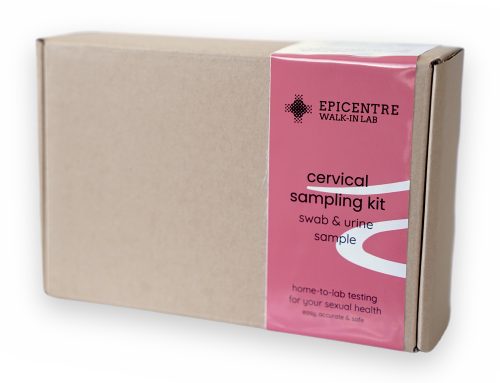
Order your package online and we courier it to you in a plain, unbranded box. The kit has illustrated instructions for a quick swab and urine sample, with no needles.
When you're done, WhatsApp us to book the courier. Pickup is free within 10km of a branch, and R300 anywhere else in South Africa. Your confidential report comes by email, usually in 5 to 7 working days.
How much is the Large panel, and does it include hepatitis?
The Large panels, for penile and prostate care or for cervical and vaginal care, are R1,925 and cover 17 targets each, including chlamydia, gonorrhoea and ureaplasma.
Hepatitis isn't in them, because it's a blood test rather than a swab or urine test. You can add a hepatitis B blood test at the same visit for a small extra cost. If you're not sure what you need, ask us when you come in.
I'm a student. What's the cheapest way to get peace of mind?
The Small panel at R1,235 covers 4 of the most common silent infections: chlamydia, gonorrhoea, herpes type 2 and trichomoniasis. There's no doctor's consultation fee, so you skip paying for a GP visit just to get a form. Show your Varsity Vibe ID for 10% off, and anything over R1,200 can be split into 4 interest-free instalments with Payflex.
If you can stretch to the Medium at R1,580, it adds HPV, herpes type 1, Mycoplasma genitalium and ureaplasma, which are the ones a cheap screen misses.
Show 2 more questions
Will my medical aid pay for an STI test?
At our walk-in labs we don't submit claims to medical aids ourselves. You pay on the day, and we give you a tax invoice with all the codes your scheme needs, so you can claim the cost back. Cover depends on your scheme and plan, so check with them first.
Some schemes pay for HPV screening for women from their preventative benefits. Here's how claiming works.
The clinic wouldn't test me because I had no symptoms. Why?
Most public clinics use what's called syndromic management. They treat the symptoms you walk in with, using a standard combination of medicines, and they don't run lab tests on people who feel well. It keeps costs down and it works for obvious infections.
The gap is the silent ones. If you have no symptoms, there's nothing to manage, so you walk out as “healthy” while Mycoplasma or chlamydia carries on quietly. A PCR panel looks for the organisms themselves, so it finds them whether or not you feel anything. If you've been turned away, you're welcome here: no doctor's referral and no appointment needed.
Where to test in Cape Town, Johannesburg and Durban
Walk into our labs in Observatory, Parktown North or Hillcrest with no appointment and no doctor's referral, or order a home kit from anywhere in South Africa. Both nurses, and Sister Emihle in Durban, do exactly what's described above.
Cape Town: Observatory
24 Lower Main Road, Observatory, Cape Town, 7925
Monday to Friday, 08:30 to 16:00
Durban: Hillcrest
2 Knelsby Avenue, Hillcrest, Durban, 3610
Monday to Friday, 08:30 to 16:00
Johannesburg: Parktown North
2 7th Avenue, Parktown North, Johannesburg, 2193
Monday to Friday, 08:30 to 16:00
All three branches are closed on South African public holidays.
Quick answers
Can I get an STI test anonymously in South Africa?
Yes, at any Epicentre branch. Check in under any name you choose, give an email address only you can see, and pay cash or card. Results go to that email only. Nothing is submitted to a medical aid.
How soon after unprotected sex can I test for STIs?
PCR panels for chlamydia, gonorrhoea, Mycoplasma genitalium, ureaplasma and trichomoniasis are reliable from 1 to 2 weeks after exposure. A 4th-generation HIV lab test detects most infections from 2 to 4 weeks, with a confirmed negative at 12 weeks. Syphilis is 3 to 6 weeks. If you think you were exposed to HIV, go to a clinic or emergency room for PEP within 72 hours. Don't wait for a test.
How often should I get an STI test?
Once a year is a good routine check, even with no symptoms. Test again after a possible exposure (wait 1 to 2 weeks for a PCR test) or before you stop using condoms with a new partner.
Can I get an STI from a toilet seat?
No. The bacteria and viruses that cause STIs, HPV included, don't survive long on cold, hard surfaces and need direct body-to-body or skin-to-skin contact to spread.
Do I need a doctor's referral for an STI test?
No. You can walk into any Epicentre branch in Cape Town, Durban or Johannesburg without a doctor's referral or an appointment, or order a home kit online.
Can men be tested for HPV?
Yes. Epicentre's PCR sexual health panels from the Medium up include HPV for any anatomy, and the Comprehensive HPV test names 27 types.
How much does an STI test cost at Epicentre?
The Small PCR panel is R1,235 (4 targets), the Medium is R1,580 (9 targets, including HPV and Mycoplasma genitalium) and the Large panels are R1,925 (17 targets). Students get 10% off with Varsity Vibe, and Payflex splits anything over R1,200 into 4 interest-free instalments.
Will my medical aid pay for an STI test?
At Epicentre's walk-in labs you pay on the day and get a tax invoice with all the codes your scheme needs, so you can claim the cost back yourself. Cover depends on your scheme and plan.
What happens if my STI test is positive?
Your report names exactly what was found. Epicentre is a laboratory and does not prescribe or treat, so you take the report to your own doctor or clinic, or we can connect you with an independent doctor who knows our reports. Your partner should be tested too.
Why people trust us with this
Ready to test?
No appointment and no doctor's referral. Walk into any of our three branches, or have a kit couriered to you in plain packaging.
Got a question we haven't answered? Ask it. Nothing is too awkward, and you don't have to book anything to ask.
More in the STI guide
- The STI guide
- How we test
- Home test kit
- Contraception and STI myths
- Chlamydia
- Gonorrhoea
- HIV
- HPV
- Syphilis
- Mycoplasma genitalium
- Ureaplasma
Important. Epicentre Walk-In Labs is a diagnostic laboratory operated by Epicentre Aids Risk Management (Pty) Ltd. We collect samples, run tests and report results. We do not diagnose conditions, prescribe medication or provide treatment, and nothing on this page is medical advice. The nurses' answers are general information, not a consultation. Results are released to the person tested. If you have symptoms that worry you, or think you may need urgent care after an exposure, see a doctor or clinic without waiting for a test result.