STI guide
Gonorrhoea: symptoms, testing and what a result means
Common, curable, and increasingly resistant to the antibiotics used against it. Here is how it is found, including in the one place most tests miss.
Basically
- About half of infections in women cause no symptoms, and throat infections almost never do.
- It is found by PCR on a swab or urine sample and is in every Epicentre panel, from R1,235 upwards.
- A genital swab does not detect throat gonorrhoea. If the exposure was oral, ask for a throat swab. We add one free.
- Results take 5 to 7 working days and no doctor's referral is needed.
- Test from 1 to 2 weeks after exposure, or straight away if you have symptoms.
- It is curable, but antibiotic resistance is a real problem. The antibiotic choice is a doctor's decision, not a guess.
- Epicentre does not treat it. If it is detected, you take the report to a doctor.
What gonorrhoea is
Gonorrhoea is caused by the bacterium Neisseria gonorrhoeae. It is one of the oldest recognised STIs and one of the most current problems in infectious disease, because it has been steadily developing resistance to the antibiotics used against it.
The World Health Organization has listed drug-resistant N. gonorrhoeae as a high-priority pathogen for new antibiotic development. That is not a reason to panic about a result, and it is a very good reason not to guess at a diagnosis or self-treat with something left in the cupboard.
How it spreads
Through vaginal, anal and oral sex, and from mother to baby during birth. Unlike some infections, gonorrhoea is comfortable in several places at once: the urethra, the cervix, the rectum, the throat and occasionally the eyes.
Pharyngeal gonorrhoea, in the throat, is usually completely symptomless. It is picked up through oral sex and it is not detected by a genital swab or a urine sample. If your exposure included oral sex, a genital-only test has not answered the question. We add a throat swab to any sexual health panel at no extra charge.
Symptoms, if there are any
Gonorrhoea is more likely than chlamydia to announce itself, but it still often does not. Symptoms, where they appear, usually start 2 to 14 days after exposure.
- Thick discharge from the penis, often yellow or green
- Increased or changed vaginal discharge
- Burning or pain when urinating
- Pain or swelling in one testicle
- Bleeding between periods
- Rectal pain, itching, discharge or bleeding
- Sore throat, occasionally, with pharyngeal infection, though usually nothing at all
Roughly half of infections in women produce no symptoms. Gonorrhoea and chlamydia also travel together often enough that finding one is a reason to have looked for the other, which is why both are on every panel we run.
What happens if it is left
- Pelvic inflammatory disease, with the same consequences as untreated chlamydia: scarring, ectopic pregnancy risk and infertility.
- Epididymitis, which can affect fertility in men.
- Disseminated gonococcal infection, where the bacterium enters the bloodstream and causes joint pain, skin lesions and fever. Uncommon, but serious.
- Higher HIV risk, both for acquiring it and transmitting it.
- Eye infection in a newborn, if it passes during birth.
How gonorrhoea is tested at Epicentre
By PCR, on a self-collected swab or a urine sample. PCR detects the bacterium's genetic material directly, which makes it far more sensitive than the older culture methods, and it needs no examination and no blood draw.
Gonorrhoea is in every one of our PCR sexual health panels.
| Test | What it covers | Price |
|---|---|---|
| Small Sexual Health Package | Gonorrhoea, chlamydia, trichomoniasis and herpes type 2. The cheapest option. | R1,235 |
| Medium Sexual Health PackageMost chosen | The 4 above plus HPV, herpes type 1, ureaplasma, E. coli O18 and Mycoplasma genitalium. | R1,580 |
| Large Sexual Health, vaginal swab | 17 targets for anyone with a cervix, adding the vaginal flora and HPV. | R1,925 |
| Large Sexual Health, penile swab | 17 targets for anyone with a penis, adding syphilis, chancroid and candida. | R1,925 |
| Extra Large Sexual Health | 34 targets. Our most thorough screen, and not sex specific. | R3,305 |
| Essential Oral Sexual Health | A throat swab, which is the only way to detect pharyngeal gonorrhoea. | R1,580 |
Those three are blood antibody tests, not PCR, and they are in none of the panels above. Add them together for R524, or take the blood-based Sexual Health Express at R1,078.
When to test after exposure
From around 1 to 2 weeks after the exposure you are worried about. If you have clear symptoms such as discharge, test straight away rather than waiting, and see a doctor at the same time. Symptomatic gonorrhoea usually needs treating sooner than a 5 to 7 working day turnaround allows for comfortably.
Your result, and what happens next
You get one report, emailed to you and to nobody else. It is the YourGenes patient report: colour coded, in plain language, with a line for every organism on your panel saying whether it was detected. There is no second document, and no separate practitioner version. This report is what your doctor reads too.
If gonorrhoea is detected, Epicentre does not treat it. We are a diagnostic laboratory. We collect samples, run tests and report results. We do not diagnose, prescribe medication or provide treatment, anywhere, including on WhatsApp. You have two equally good routes from here:
- Your own doctor, clinic or pharmacy clinic. Take the report. It names the organism, which is exactly what they need.
- An independent doctor we work with, who consults online or in person on sexual health results. She prescribes on her own responsibility, not as an Epicentre service.
This is the part people skip. If one of you is treated and the other is not, the infection comes straight back at the next exposure. Your partner should be tested, whatever your result says about you.
One extra note for gonorrhoea specifically: because resistance is a live problem, the antibiotic choice matters and it is genuinely a doctor's decision. Do not take something left over from a previous infection, and do not take a friend's. Partial treatment is how resistance spreads.
Where to test
Cape Town
24 Lower Main Road, Observatory, 7925
Monday to Friday, 08:30 to 16:00
Durban
2 Knelsby Avenue, Hillcrest, 3650
Monday to Friday, 08:30 to 16:00
Johannesburg
02 7th Avenue, Parktown North
Monday to Friday, 08:30 to 16:00
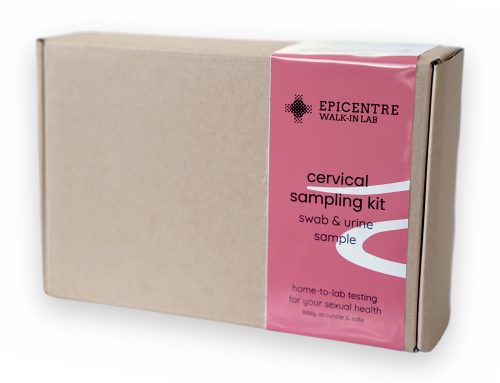
Walk in during those hours, no appointment and no doctor's referral. All three branches are closed on South African public holidays. If you would rather not come in, a home kit is couriered to you in discreet packaging and a free courier collects the sample.
You do not need a reason to get tested
No doctor's referral, no appointment, no awkward conversation first. Results are emailed to you and to nobody else.
Common questions
Can I get tested for gonorrhoea without a doctor's referral?
Yes. Walk into any Epicentre branch or order a home kit. No doctor's referral, no appointment. You only need a doctor afterwards if gonorrhoea is detected and needs treating, because Epicentre does not prescribe or treat.
How much does a gonorrhoea test cost in South Africa?
Gonorrhoea is in every Epicentre PCR panel, so you pay for the panel. The Small is R1,235 for 4 targets, the Medium R1,580 for 9, the 17-target panels R1,925 and the 34-target Extra Large R3,305. Students get 10% off with a Varsity Vibe ID.
How long do gonorrhoea results take?
5 to 7 working days, emailed to you as a YourGenes report.
Can gonorrhoea be in my throat without symptoms?
Yes, and it usually is. Pharyngeal gonorrhoea is typically silent and it is not detected by a genital swab or urine sample. If your exposure included oral sex, ask for a throat swab. We add one to any sexual health panel at no extra charge.
How soon after sex can I test for gonorrhoea?
From around 1 to 2 weeks after exposure for a reliable PCR result. If you already have symptoms, test now.
Is gonorrhoea curable?
Yes, with the right antibiotic from a doctor. The complication is that the bacterium has been developing resistance, which is exactly why the antibiotic choice should be a doctor's and not a guess. Epicentre does not prescribe.
Can I test for gonorrhoea at home?
Yes. It is tested on a self-collected swab or a urine sample, both of which work from a home kit couriered to you. A free courier collects the sample.
Do I need to test for HIV as well?
It is worth it. An active STI raises the risk of both acquiring and transmitting HIV, and HIV is not covered by any PCR panel because it is a blood test. The combined HIV, syphilis and hepatitis B add-on is R524, or a rapid HIV test on its own is R150 with a result in 15 to 20 minutes.
Should my partner get tested?
Yes. Your partner should be tested regardless of your result. Treating one person and not the other is how an infection returns.
Why people trust us with this
Ready to test
No appointment and no doctor's referral. Walk into any of our three branches, or have a kit couriered to you in discreet packaging.
Not ready yet
That is normal, and there is no rush. Take the prices away with you, or ask us something without booking anything.
Other infections in this guide
Important. Epicentre Walk-In Labs is a diagnostic laboratory operated by Epicentre Aids Risk Management (Pty) Ltd. We collect samples, run tests and report results. We do not diagnose conditions, prescribe medication or provide treatment, and nothing on this page is medical advice. Results are released to the person tested. If you have symptoms that worry you, or think you may need urgent care after an exposure, see a doctor or clinic without waiting for a test result.