
If you’ve ever experienced a burning sensation when you urinate or felt the constant urge to go, only to pass a small amount of urine, you might have had a urinary tract infection (UTI). UTIs are one of the most common infections, especially among women. In fact, up to 60% of women will experience at least one UTI in their lifetime, compared to only about 12% of men.
This stark gender gap is consistent across global data from 1990 to 2021, showing that women of all ages are significantly more likely to seek medical care for UTIs than men (John, 2025).
6 Reasons Why Females Get More UTIs Than Males
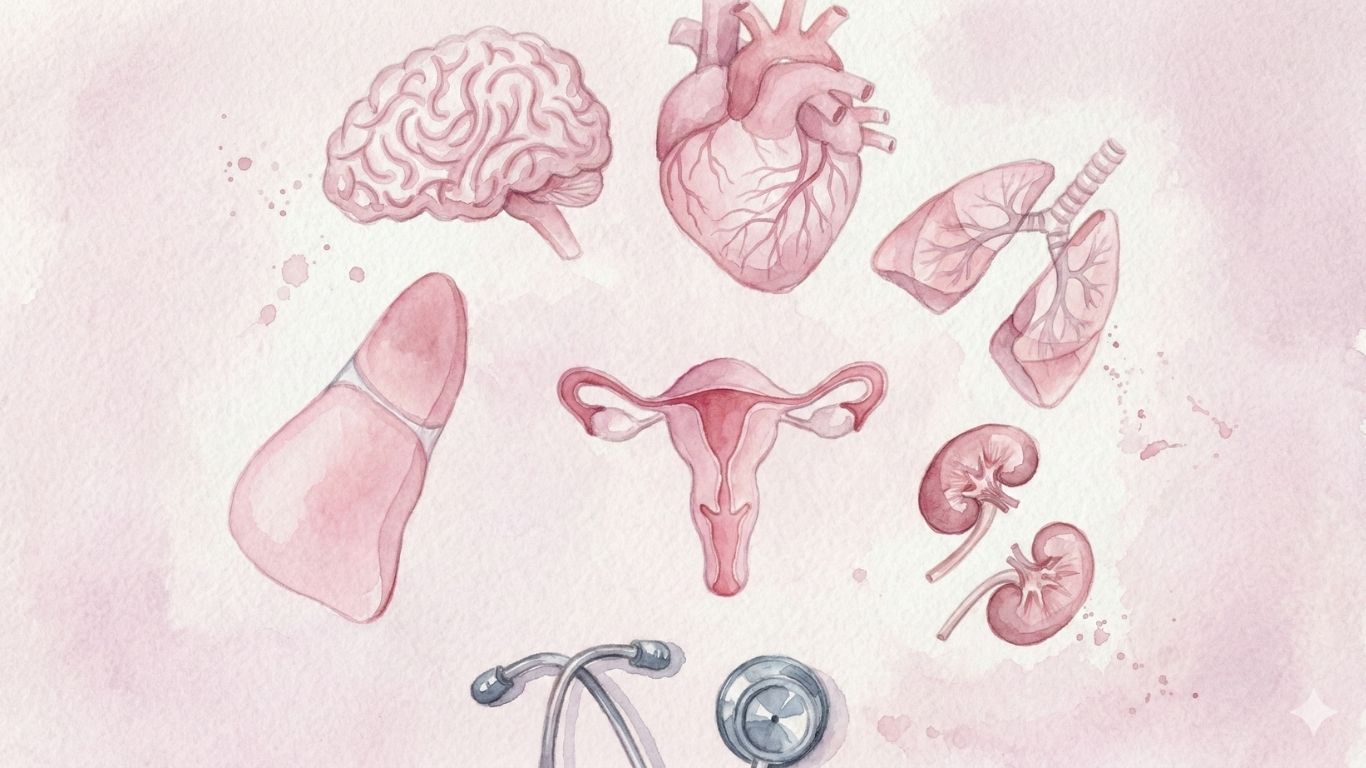
Anatomy of the male and female reproductive systems
Anatomy plays a major role in why women are more prone to urinary tract infections. The female urethra is short, its only about 3 to 4 cm in length compared to the male urethra, which is typically 18 to 22 cm long and curves through the prostate and penis (Hickling, 2012).
This shorter, straighter path means bacteria, particularly gut microbes like E. coli, have a much easier and quicker route to the bladder. Additionally, the female urethral opening is located close to both the anus and the vaginal opening, increasing the risk of contamination (Hicklings, 2012).
In contrast, men benefit from a longer urethral distance, changes in angle, and the presence of antimicrobial substances in prostatic secretions, all of which make it harder for bacteria to ascend and cause infection. This anatomical difference is a key factor in the gender imbalance seen in UTI cases (Sabih, 2024).
Hormones & Life Stages
Hormonal changes throughout a woman’s life significantly influence her risk of developing urinary tract infections. During the reproductive years, high estrogen levels help maintain a healthy vaginal environment rich in Lactobacillus, which acts as a natural defense against harmful bacteria. However, this protection can be diminished by frequent sexual activity or the use of certain contraceptives like diaphragms or spermicides, which disrupt the natural flora. In pregnancy, rising progesterone levels and the growing uterus contribute to slower bladder emptying and relaxed ureters, creating an environment where bacteria can multiply more easily (Amabebe, 2018).
After menopause, estrogen levels drop sharply, leading to thinning of the vaginal and urethral mucosa, a decline in beneficial Lactobacillus, and increased adherence of E. coli to urinary tract tissues. These changes contribute to a second peak in UTI incidence among women aged 40–49, with rates continuing to rise after the age of 65 (Amabebe, 2018)
Sexual Activity & Contraception
Sexual activity is one of the most well-established risk factors for UTIs in women, especially during the reproductive years. In fact, up to 90% of bladder infections in young sexually active women are linked to intercourse which is a phenomenon often referred to as “honeymoon cystitis” (Seid, 2023)
How Does Sexual Intercourse Cause UTI’s?
The friction from sexual activity can facilitate the movement of bacteria from the peri-anal area into the urethra. Certain contraceptive methods further increase this risk. Spermicides and diaphragms disrupt the natural balance of vaginal flora, particularly by reducing protective Lactobacillus levels, which can elevate the risk of UTIs by up to three times. In contrast, condoms without spermicide and oral contraceptives do not carry the same elevated risk, making them safer options for women prone to recurrent infections (Seid, 2023).
Post-Menopause & Ageing Impact On UTI’s
As women age, declining estrogen levels contribute to urogenital atrophy—thinning of the vaginal and urethral tissues—which makes it easier for bacteria to colonize and invade the urinary tract. In addition, bladder contractility decreases with age, making it harder to fully empty the bladder, and the use of urinary catheters becomes more common, further increasing infection risk.
While men are generally less prone to UTIs, their risk does rise after the age of 60 due to prostate enlargement. An enlarged prostate can obstruct urine flow, leading to urine retention—an environment where bacteria can multiply. However, even in older age, the lifetime prevalence of UTIs in men remains significantly lower than in women (Carlson, 2025).
Behavioural & Lifestyle Factors
Hygiene and lifestyle habits also play a role in the gender gap in UTIs. For women, wiping front to back is crucial to avoid introducing E. coli to the urethra. Post-sex urination helps flush out bacteria and lowers recurrence risk. Tight underwear or leggings can trap moisture and warmth—ideal for bacterial growth—due to female anatomy. Conditions like diabetes and obesity, more common in women globally, further raise the risk by impairing immunity and bladder emptying. In men, these factors are less impactful until older age (Badran, 2019).
Catheters & Medical Procedures
Catheter use significantly increases UTI risk, especially in women. Temporary or long-term catheterization is more common in hospitalized or post-surgical women—particularly after gynecologic procedures. Catheters can act as a direct pathway for bacteria to enter the bladder, bypassing many of the body’s natural defenses and leading to infections known as catheter-associated UTIs (CAUTIs) (Werneburg, 2022).
Practical Tips to Outsmart UTIs
Hydrate generously—aim for at least 2 L of fluid daily to keep urine dilute and flowing.
Urinate after sex to flush potential invaders.
Choose a non-spermicidal contraception if UTIs are frequent.
Front-to-back wiping—simple but powerful.
Consider vaginal oestrogen cream post-menopause (after consulting your clinician).
Manage glucose & weight; both lower recurrence risk.
Don’t delay treatment. Untreated UTIs can progress to kidney infection or, rarely, sepsis — a life-threatening complication
When to Test if you Suspect a UTI
Visit Epicentre for a UTI Test if you experience the following symptoms:
• Burning or pain when urinating
• Fever or chills
• Flank or lower-back pain
• Blood in urine
• Symptoms persisting > 48 h despite home measures
Early targeted antibiotics clear most UTIs within days and limit the chance of serious complications (Sabih, 2024).

📚 References (APA 7th)
1. John L Brusch, MD, FACP; Chief Editor: Michael Stuart Bronze, Urinary Tract Infection (UTI) and Cystitis (Bladder Infection) in Females Accessed 11 June 2025. https://emedicine.medscape.com/article/233101-overview
2. Hickling DR, Sun TT, Wu XR. Anatomy and Physiology of the Urinary Tract: Relation to Host Defense and Microbial Infection. Microbiol Spectr. 2015 Aug;3(4):10.1128/microbiolspec.UTI-0016-2012. doi: 10.1128/microbiolspec.UTI-0016-2012. PMID: 26350322; PMCID: PMC4566164.
3. Sabih A, Leslie SW. Complicated Urinary Tract Infections. [Updated 2024 Dec 7]. In: StatPearls [Internet]. Treasure Island (FL): StatPearls Publishing; 2025 Jan-. Available from: https://www.ncbi.nlm.nih.gov/books/NBK436013/
4. Amabebe E, Anumba DOC. The Vaginal Microenvironment: The Physiologic Role of Lactobacilli. Front Med (Lausanne). 2018 Jun 13;5:181. doi: 10.3389/fmed.2018.00181. PMID: 29951482; PMCID: PMC6008313
5. Seid M, Markos M, Aklilu A, Manilal A, Zakir A, Kebede T, Kulayta K, Endashaw G. Community-Acquired Urinary Tract Infection Among Sexually Active Women: Risk Factors, Bacterial Profile and Their Antimicrobial Susceptibility Patterns, Arba Minch, Southern Ethiopia. Infect Drug Resist. 2023 Apr 18;16:2297-2310. doi: 10.2147/IDR.S407092. PMID: 37095780; PMCID: PMC10122500.
6. Carlson K, Nguyen H. Genitourinary Syndrome of Menopause. [Updated 2024 Oct 5]. In: StatPearls [Internet]. Treasure Island (FL): StatPearls Publishing; 2025 Jan-. Available from: https://www.ncbi.nlm.nih.gov/books/NBK559297/
7. Badran YA, El-Kashef TA, Abdelaziz AS, Ali MM. Impact of genital hygiene and sexual activity on urinary tract infection during pregnancy. Urol Ann. 2015 Oct-Dec;7(4):478-81. doi: 10.4103/0974-7796.157971. Retraction in: Urol Ann. 2019 Jul-Sep;11(3):338. doi: 10.4103/0974-7796.188618. PMID: 26692669; PMCID: PMC4660700.
8. Werneburg GT. Catheter-Associated Urinary Tract Infections: Current Challenges and Future Prospects. Res Rep Urol. 2022 Apr 4;14:109-133. doi: 10.2147/RRU.S273663. PMID: 35402319; PMCID: PMC8992741.

Meet The Author
Hazel Mantshiu is a health and diagnostic consultant with a robust academic background, including a postgraduate degree in Pharmaceutical Sciences, Clinical Research, and Medicines Regulatory Affairs, as well as a BSc in Biomedicine. Her professional experience encompasses roles such as Medical Representative, Clinical Trial Coordinator, Medical Coder, and Site Activation Specialist.
Hazel’s extensive expertise in clinical research and medicines regulation positions her as a knowledgeable contributor to discussions on health diagnostics and patient care



References
Deslandes, A., Moraes, H., Ferreira, C., Veiga, H., Silveira, H., Mouta, R., … & Laks, J. (2009). Exercise and mental health: many reasons to move. Neuropsychobiology, 59(4), 191–198. https://doi.org/10.1159/000223730
Mahalik, J. R., Burns, S. M., & Syzdek, M. (2007). Masculinity and perceived normative health behaviors as predictors of men’s health behaviors. Social Science & Medicine, 64(11), 2201–2209.
Ratele, K. (2019). Engaging youth and men in preventing gender-based violence: Lessons from South Africa. Psychology of Men & Masculinities, 20(1), 10–21.
Sarris, J., Logan, A. C., Akbaraly, T. N., Amminger, G. P., Balanza-Martinez, V., Freeman, M. P., … & Jacka, F. N. (2015). Nutritional medicine as mainstream in psychiatry. The Lancet Psychiatry, 2(3), 271–274. https://doi.org/10.1016/S2215-0366(14)00051-0
South African Depression and Anxiety Group. (2021). Mental health stats in SA. Retrieved from https://www.sadag.org/
World Health Organization. (2022). Depression. Retrieved from


