Why South African Women Are Battling with UTIs
Urinary tract infections are a common health issue among South African women, but their frequency and recurring nature often make them feel like an endless cycle. If it feels like déjà vu every time you reach for cranberry juice, you are not alone.
Understanding why UTIs are so prevalent in South Africa – and why they keep coming back – is the first step toward breaking the pattern.
Why are UTIs so common in South African women?
Several factors make South African women particularly vulnerable to urinary tract infections. Some are biological, some are environmental, and some are the result of how we approach treatment.
Female anatomy
The female urethra is only 3 – 4 cm long, compared with 18 – 22 cm in men. This shorter distance gives bacteria – particularly gut microbes like E. coli – a much easier route to the bladder (Hickling, 2012).
Limited access to clean water and sanitation
Many South African communities face water shortages that make personal hygiene difficult to maintain consistently. Without regular access to clean water, the risk of bacterial contamination rises significantly.
Self-medication and delayed treatment
Many women delay seeking treatment, self-medicating with leftover antibiotics or over-the-counter remedies hoping the discomfort will subside. Without lab tests to identify the specific bacteria, treatments often miss the mark.
Antibiotic resistance
Using the wrong antibiotic – say, targeting E. coli when Klebsiella or Enterococcus is the true culprit – does not clear the infection. Worse, it contributes to antibiotic resistance, making future UTIs harder to treat (PubMed, 2021).
Hormonal changes
Menopause reduces protective vaginal flora, making it easier for bacteria to invade. Pregnancy, contraceptive use, and hormonal fluctuations throughout life all shift the balance (Badran, 2019).
Underlying health conditions
Diabetes, kidney stones, and urinary tract abnormalities increase UTI risk. These conditions are common in South Africa and often go undiagnosed for years.
Why UTIs keep coming back
Recurrent UTIs are defined as two or more infections in six months, or three or more in a year. They are unfortunately common, affecting over 100 million people worldwide annually (Newland et al., 2024). Here is why the cycle continues:
Leftover bacteria. Even after completing antibiotics, stubborn bacteria can linger in the bladder wall, waiting for the right conditions to multiply again.
Wrong antibiotic. If you do not know which bacteria you are treating, there is a good chance you are using the wrong treatment. A standard urine dipstick does not tell you which specific organism is causing the infection.
Biofilm formation. Some bacteria form protective layers (biofilms) on the bladder wall that antibiotics cannot penetrate, leading to chronic, recurring infections.
The problem with guessing
Most women who visit a GP for a UTI receive a broad-spectrum antibiotic based on symptoms alone. This approach has two problems:
First, if the wrong antibiotic is prescribed – targeting E. coli when the actual cause is Candida, Staphylococcus, or Group B Strep – the infection will not clear, and you will be back at the doctor within weeks.
Second, every unnecessary course of antibiotics contributes to antibiotic resistance. South Africa already faces significant challenges with drug-resistant infections, and broad-spectrum prescribing without testing makes the problem worse.
PCR testing identifies the exact organism. Unlike a standard urine culture that can take days and may miss certain pathogens, Epicentre's 11-target UTI PCR panel identifies the specific bacteria or yeast causing your infection – including antibiotic-resistant strains – so your doctor can prescribe the right treatment from the start.
What Epicentre's UTI test covers
UTI Package – 11-Target PCR Screen
Results in 5 – 7 working days · No doctor's referral needed · Walk-in or home kit available
This panel covers the most common bacterial and fungal causes of UTIs. The inclusion of seven Candida species – including resistant strains like C. glabrata and C. krusei – is important because fungal UTIs are frequently misdiagnosed as bacterial, leading to repeated courses of antibiotics that make the problem worse.
When should you get tested?
Consider PCR testing rather than relying on symptoms alone if:
- You have had two or more UTIs in the past six months
- Your symptoms did not resolve after antibiotics
- You experience recurring burning, urgency, or pelvic discomfort
- You have diabetes, are pregnant, or have a weakened immune system
- You want to identify the exact organism before starting treatment
Stop Guessing. Get Tested.
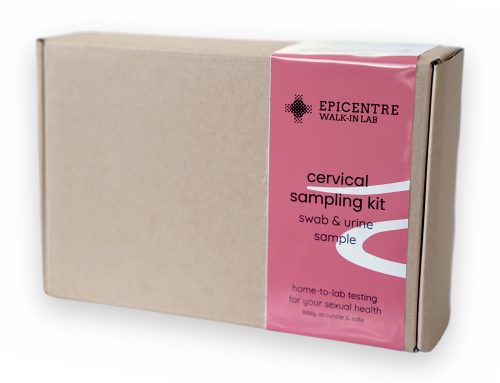
11-target UTI PCR panel. Walk in to any Epicentre branch – no doctor's referral needed – or order a home collection kit.
UTIs across South Africa
UTIs affect women across all socioeconomic groups in South Africa, but the experience and access to care differ significantly.
In private healthcare and affluent communities, the primary problem is self-treatment without testing. Over-the-counter remedies and leftover antibiotics are easily accessible, but without identifying the specific organism, treatment often misses the mark – particularly when the cause is a resistant Candida species rather than bacteria. Women in private care may also be prescribed broad-spectrum antibiotics by GPs who do not have access to species-level diagnostics, contributing to antibiotic resistance.
In public healthcare and lower-income communities, delayed access to care, limited sanitation, and overcrowded clinics mean UTIs are more likely to become recurrent before treatment begins. Standard urine dipsticks – the primary diagnostic tool in many public facilities – cannot identify the specific organism causing the infection, let alone distinguish between bacterial and fungal causes.
For travellers and foreign nationals in South Africa, changes in climate, water exposure, and diet can disrupt the urinary microbiome. If you develop a UTI during your stay, Epicentre's walk-in branches in Durban (Hillcrest), Cape Town (Observatory), and Johannesburg (Parktown North) offer PCR testing without a doctor's referral – with results delivered digitally wherever you are.
How to reduce your UTI risk
While testing identifies the cause, prevention reduces the frequency. Evidence-based steps that make a difference:
- Wipe front to back – prevents introducing gut bacteria to the urethra
- Urinate after sex – flushes bacteria before they can travel to the bladder
- Stay hydrated – dilutes urine and flushes bacteria more frequently
- Avoid holding urine – a full bladder gives bacteria time to multiply
- Wear breathable underwear – tight, synthetic fabrics trap moisture and warmth
- Avoid irritating products – scented soaps, douches, and sprays disrupt vaginal flora
- Understand your microbiome – your gut microbiome and urinary tract are closely connected. Gut bacteria like E. coli are the leading cause of UTIs
- Consider probiotics – Lactobacillus strains help maintain a healthy urinary microbiome
If you experience recurrent UTIs, testing your vaginal microbiome can also reveal whether an underlying imbalance in your vaginal flora is contributing to the cycle. Epicentre's Vaginal Microbiome Test analyses 17 organisms to identify dysbiosis that predisposes you to repeated infections.
References
- Badran, Y.A. et al. (2019). Risk factors for urinary tract infections. Urology Annals, 11(3), 262 – 268.
- Hickling, D.R. et al. (2012). Anatomy and physiology of the urinary tract. Surgical Clinics of North America, 92(6), 1455 – 1469.
- John, A.S. et al. (2025). Global burden of urinary tract infections 1990 – 2021. The Lancet Infectious Diseases.
- Mediclinic (2023). Urinary tract infections in South African women.
- Newland, J. et al. (2024). Recurrent urinary tract infections: mechanisms and management. Nature Reviews Urology.
- PubMed (2021). Antibiotic resistance in urinary tract infections: a South African perspective.